


MILK STABILIZERS
Solutions supporting heat stability and physical stability throughout shelf life in UHT and sterilised milk, chocolate and flavoured milk beverages, and protein-enriched milk-based drinks.
Key technological challenges in UHT and flavoured milk production
In UHT processing, milk is raised above 135 °C for a few seconds. This thermal load disrupts the equilibrium of casein micelles and serum proteins. Fouling on heat-exchanger surfaces shortens production runs; after filling, sediment forms at the bottom of the pack; and over months the product may thicken and gel. This last defect is known as age gelation and is the main factor that physically determines the end of shelf life.
In chocolate milk and flavoured milk beverages, two further problems arise: sedimentation of cocoa particles and formation of a cream ring at the surface. In protein- or calcium-fortified beverages the thermal stability window narrows even further. The common root cause is often the raw milk itself: ionic calcium levels, pH and mineral balance vary with season, region and stage of lactation. In milk held for extended periods under cold storage, heat-resistant proteases produced by psychrotrophic bacteria survive UHT processing and accelerate gelation during storage.
Solution approach
Stabilisation in this product category relies on three distinct tools, each targeting a different root cause:
- Controlling calcium balance: During heating, free calcium ions form bridges between casein micelles, leading to aggregation. Citrates and phosphates sequester these ions, increasing the net negative charge on the micelle surface and making the milk more resistant to heat treatment. Not all phosphates deliver the same result: research has shown that sodium hexametaphosphate (SHMP), trisodium citrate and disodium phosphate reduce ionic calcium and sediment, whereas monosodium phosphate — which lowers pH — shows no significant effect. Long-chain polyphosphates are also known to delay age gelation.
- Keeping particles in suspension: In chocolate milk, κ-carrageenan interacts with casein to form a weak, fluid gel network at a very low dosage, keeping particles suspended throughout shelf life. This function cannot be achieved with calcium-sequestering salts alone; the two ingredients complement each other.
- Protecting the emulsion: The primary tool against cream-ring formation is homogenisation. Aseptic homogenisation downstream of UHT disperses protein and fat clusters formed during heat treatment, reducing both sediment and cream separation.
One limitation should be clearly understood: protease-induced gelation cannot be prevented by stabilisers. In this case, the solution lies in raw-milk quality and storage duration.
PROMEL product ranges
- UHT milk stabiliser (PROMEL M900) — a hydrocolloid-free blend of polyphosphate, triphosphate, sodium citrate and sodium phosphate; controls calcium balance to limit protein sedimentation and phase separation during heat treatment and storage.
- Alkaline phosphate (PROMEL MS 12) — provides controlled pH elevation in milk-based formulations prepared with high-acidity milk raw materials, supporting thermal stability.
- Transglutaminase (Promel Ultralase-1000) — an enzyme that strengthens the protein network by forming covalent cross-links between milk proteins; applicable in dairy desserts and high-protein formulations in product categories and markets where regulations permit.
Process and formulation tips
- The stabiliser should be added at the standardisation stage, before heat treatment; pre-dissolving in a small amount of milk or water is recommended to prevent lumping.
- Phosphate–citrate blends are typically used at 0.05–0.1 % in drinking milk and milk beverages. Dosage should not be kept constant but adjusted according to the incoming milk's pH and alcohol (ethanol) stability test.
- If calcium is over-sequestered, micelles begin to dissociate; the product changes in colour and viscosity, and a salty or soapy taste may develop. Excessively alkaline pH also accelerates Maillard browning.
- In chocolate milk, the carrageenan dosage requires fine-tuning: too little and the cocoa settles; too much and the product takes on a pudding-like consistency or gels in the pack.
- Shelf-life tests should be conducted not only under refrigeration but also at ambient temperature and under accelerated conditions; sediment levels should be monitored quantitatively by centrifugation.
Frequently asked questions
Can a stabiliser be added to plain UHT milk?
This is a regulatory question before it is a technological one. The use of additives in unflavoured drinking milk is strictly limited by the relevant product communiqué and food additive regulations. Flavoured milk beverages fall under a different category. The product's regulatory classification must be clarified before any formulation work begins.
Are bottom sediment and surface cream ring the same problem?
No. Bottom sediment consists mainly of aggregated protein and cocoa particles and is managed through calcium balance and carrageenan. The surface ring is cream separation and is primarily related to homogenisation efficiency.
When is a hydrocolloid-free stabiliser sufficient?
If the product contains no particles that need to be kept in suspension — for example plain or clear-flavoured milk beverages — a phosphate–citrate blend that controls calcium balance is usually sufficient and does not alter the mouthfeel of the beverage.
When your raw-milk profile, heat-treatment line and target shelf life are evaluated together, the right stabilisation strategy becomes clear. The Technofood technical team can support this evaluation with samples and pilot trials.
Products for this Application
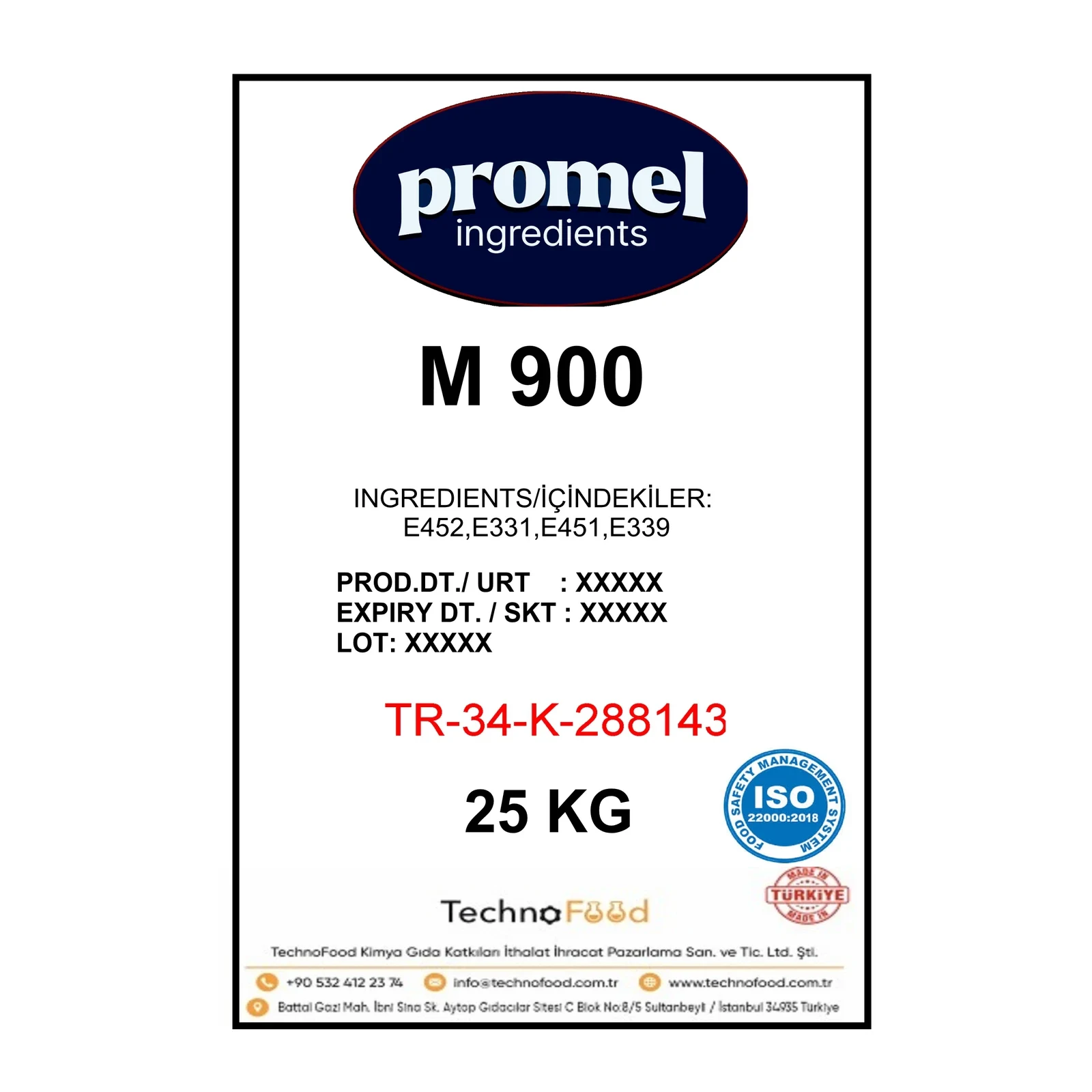
PROMEL M900
PROMEL M900 is a UHT milk stabiliser composed of polyphosphate, triphosphate, sodium citrate and sodium phosphate; by regulating calcium balance, it limits protein sedimentation and phase separation during heat treatment and storage.
View →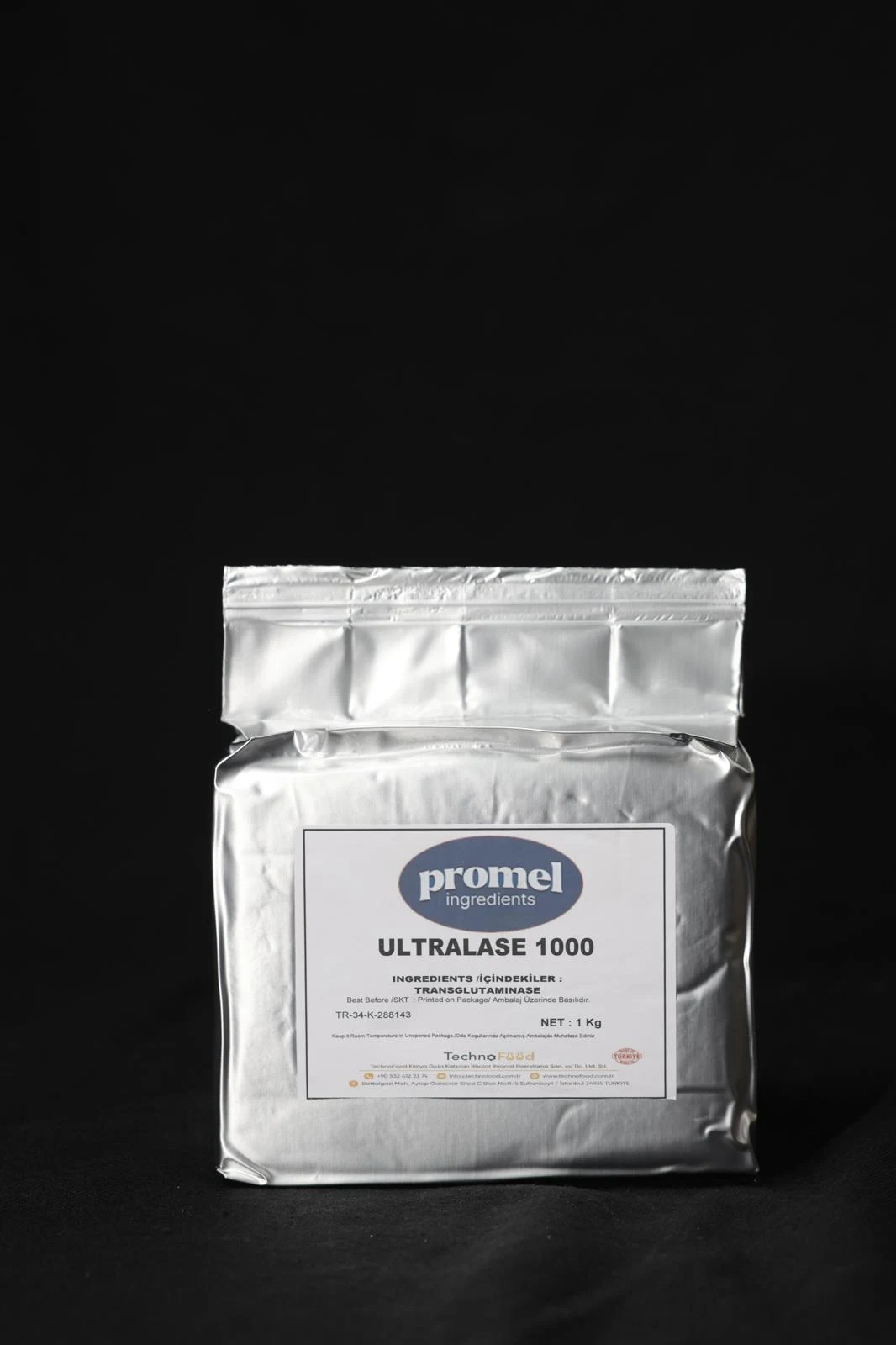
PROMEL ULTRALASE-1000
Promel Ultralase-1000 is a microbial transglutaminase preparation that forms covalent cross-links between milk proteins, increasing viscosity, reducing syneresis and improving texture in fermented milk products.
View →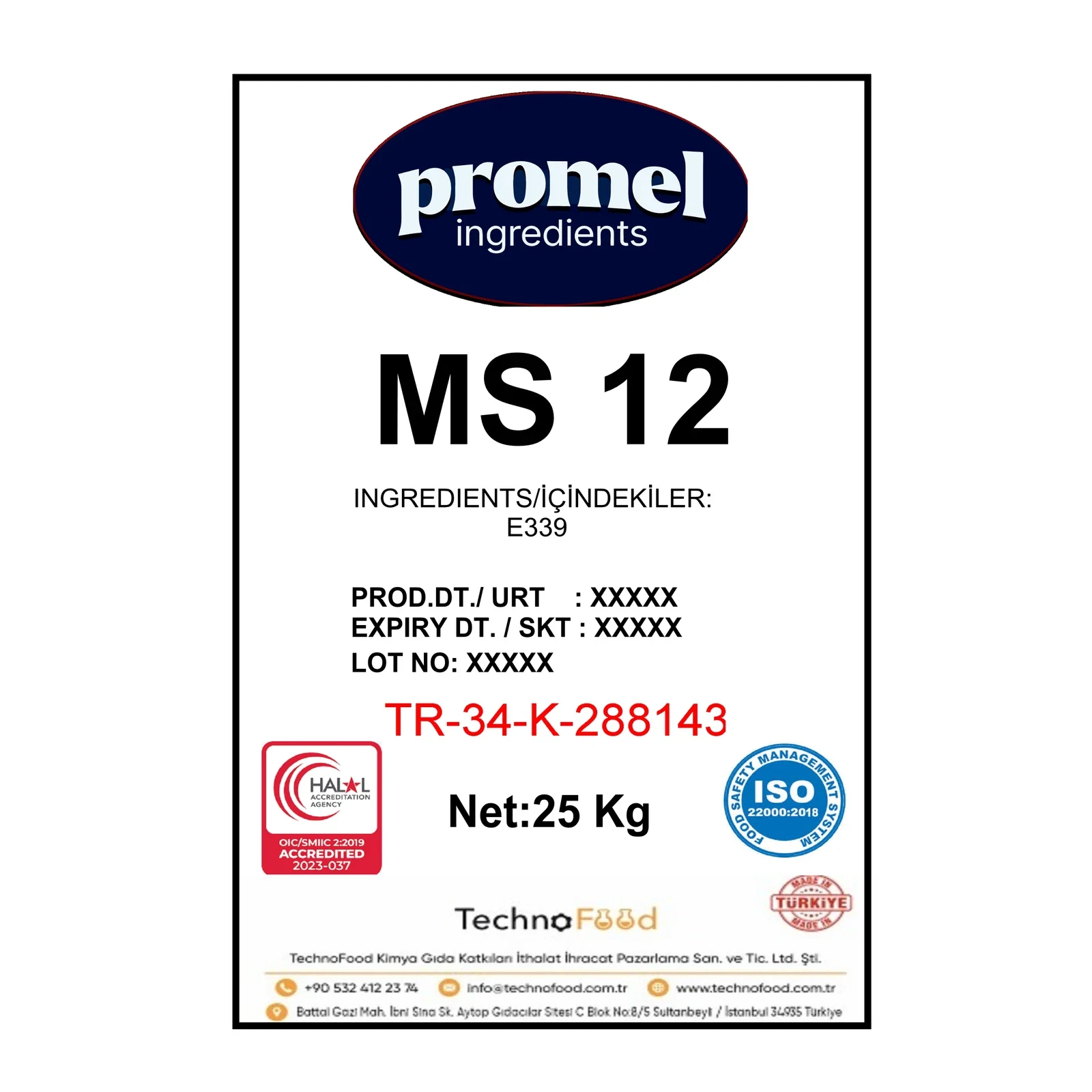
PROMEL MS 12
Promel MS 12 is an alkaline phosphate salt that raises pH in a controlled manner in processed cheese and dairy-based products. It is used as a corrective agent alongside the primary emulsifying salt when working with high-acidity raw materials.
View →