

PRESERVATIVES
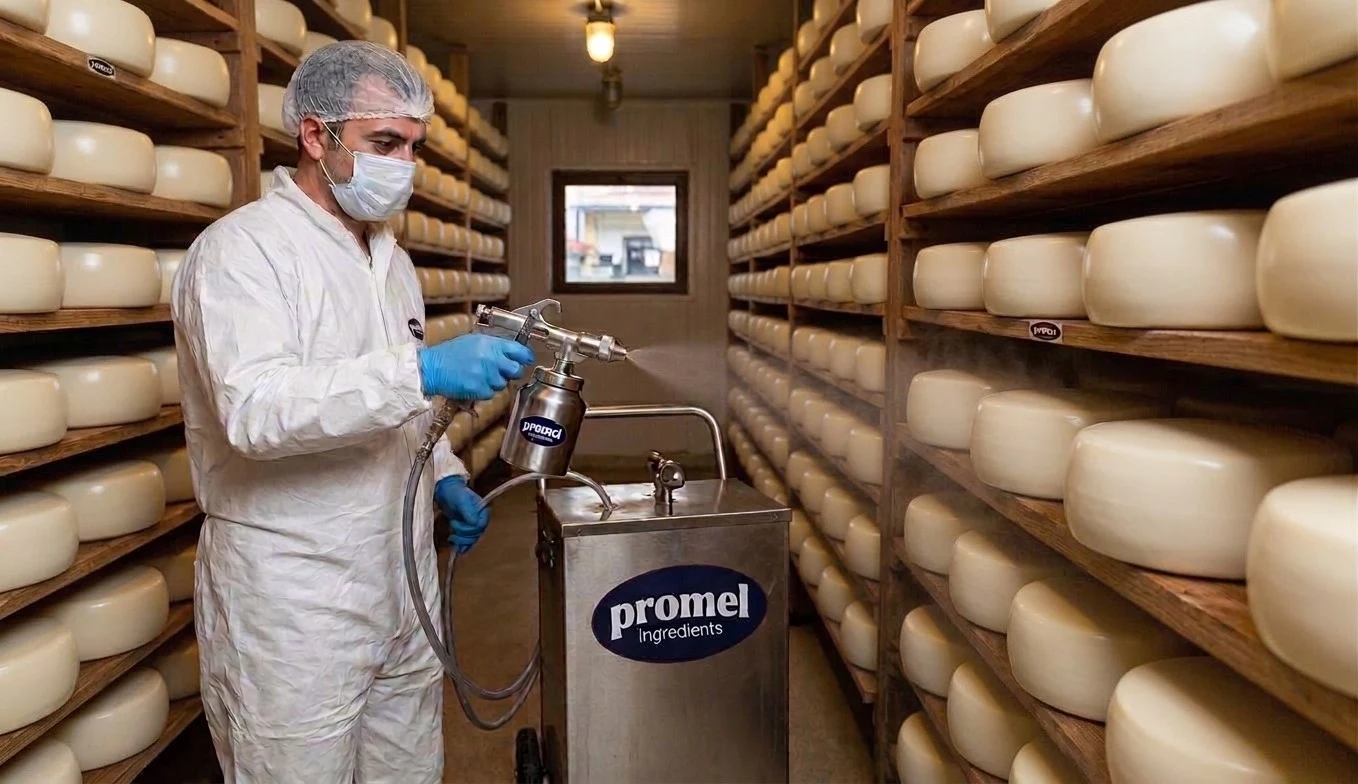
PROMEL preservative solutions targeting mould, yeast and Clostridium-related spoilage in cheese and dairy products: natamycin, nisin, lysozyme and potassium sorbate, presented with their regulatory requirements.
Microbial spoilage in cheese: key technological challenges
The need for preservatives in cheese and dairy products is determined by which microorganism causes problems at which stage. If the source of spoilage is misdiagnosed, even the most potent preservative will fail. The main spoilage scenarios encountered in practice are as follows:
- Surface moulds and yeasts: occur in ripening rooms, under vacuum packaging or coatings, and after slicing and shredding; they produce coloured spots, a sticky surface and off-odours.
- Late blowing: caused by Clostridium tyrobutyricum spores germinating during ripening and converting lactate into butyric acid, CO₂ and H₂; results in irregular eyes, cracks and a sharp, sour off-flavour in hard and semi-hard cheeses.
- Spore-related spoilage in processed cheese: processing temperatures are insufficient to destroy bacterial spores; spores originating from raw materials can germinate during storage, producing gas and off-odours.
- Early blowing: caused by coliform bacteria and yeasts, predominantly a hygiene issue; preservatives are not the solution.
In some products the use of preservatives is restricted or not permitted at all. Preservatives do not replace good hygiene practices and correct heat treatment — they complement them.
Solution approach: target-specific preservatives
| Preservative | Target | Mode of action | Point of application |
|---|---|---|---|
| Natamycin (E235) | Moulds and yeasts | Binds to ergosterol in the cell membrane; ineffective against bacteria | Cheese surface, coating emulsion |
| Nisin (E234) | Gram-positive bacteria, germination of Clostridium spores | Binds to cell wall precursor lipid II and forms pores in the membrane | Processed cheese mass, cheese milk |
| Lysozyme (E1105) | Clostridium tyrobutyricum vegetative cells | Hydrolyses β-1,4 glycosidic bonds in peptidoglycan | Cheese milk, before coagulation |
| Potassium sorbate (E202) | Moulds and yeasts | Undissociated sorbic acid suppresses cell metabolism | Mass incorporation or surface application |
Because natamycin has no effect on bacteria, it inhibits moulds and yeasts without interfering with ripening cultures. Nisin is ineffective against Gram-negative bacteria, yeasts and moulds; it is therefore a complement to — not a substitute for — sorbate or natamycin. The strength of lysozyme lies in its ability to target the Clostridium cell wall without affecting most lactic cultures; however, it may not suffice on its own at high spore loads. The efficacy of sorbate is pH-dependent: since the pKa of sorbic acid is 4.76, it is more effective in acidic products; it may also exert an inhibitory effect on certain cultures.
PROMEL product groups
- Natamycin (Silvamycin Natamycin) — powder containing a minimum of 50 % natamycin; mould and yeast control on cheese surfaces
- Nisin (Promel Silvanisin) — for use against Clostridium spores and Gram-positive spoilage in processed cheese and other cheeses
- Lysozyme (Silvazyme Lysozyme) — prevention of late blowing in ripened hard and semi-hard cheeses
- Sorbate (Potassium Sorbate) — readily water-soluble E202; for mass and surface applications
- Brine management (Promel Brinemix) — not a preservative; regulates the mineral and pH balance of brine to limit softening and slipperiness on the surface of white brined cheese
Regulatory and process tips
- Under the Turkish Food Codex Food Additives Regulation and EU Regulation 1333/2008, natamycin may only be applied to the external surface of hard, semi-hard and semi-soft cheeses; the surface level must not exceed 1 mg/dm² and natamycin must not be detectable at a depth of 5 mm.
- For nisin, the maximum permitted level in ripened cheese and processed cheese in the EU is 12.5 mg/kg; 1 g of a preparation with an activity of 1000 IU/mg corresponds to approximately 25 mg of pure nisin.
- Lysozyme may be used in ripened cheese under the quantum satis principle; as it is egg-derived, allergen labelling is required on the final product.
- Sorbate limits are expressed as sorbic acid; 1.34 g of potassium sorbate corresponds to approximately 1 g of sorbic acid.
- Natamycin suspensions should be freshly prepared each day and kept under continuous agitation; light and oxidants reduce activity.
- In cases of late blowing, the first step is to determine the spore count in the milk; if the spore load is high, measures such as silage and milking hygiene improvements and bactofugation take priority over preservatives.
Frequently asked questions
Natamycin or sorbate?
For surface applications, natamycin is effective at very low dosages, is largely independent of pH and does not affect the ripening flora. Sorbate, on the other hand, is pH-sensitive, but because it can be incorporated into the mass, it may be an option in certain product categories where natamycin is not permitted. The decision depends on the product category and the permitted usage.
Can nisin and lysozyme be used together?
Since both target Clostridium through different mechanisms, their combined use is considered in certain cheese types. However, the product categories in which they are permitted differ; the combination should be validated through a pilot trial, taking into account the product category and the cultures used.
Do preservatives affect starter cultures?
Natamycin and lysozyme do not affect most lactic cultures, but certain strains may be sensitive to lysozyme. Nisin added to cheese milk may inhibit nisin-sensitive starter strains; culture compatibility should be tested in advance.
For diagnosis of the spoilage pattern, selection of the permitted preservative for your product category and dosage calculation, contact the Technofood technical team for support and request samples for your shelf life trials.
Products for this Application
Potassium Sorbate
Promel Potasyum Sorbat is the readily water-soluble potassium salt of sorbic acid (E202), used to extend shelf life by inhibiting the growth of moulds and yeasts in dairy products and other foods.
View →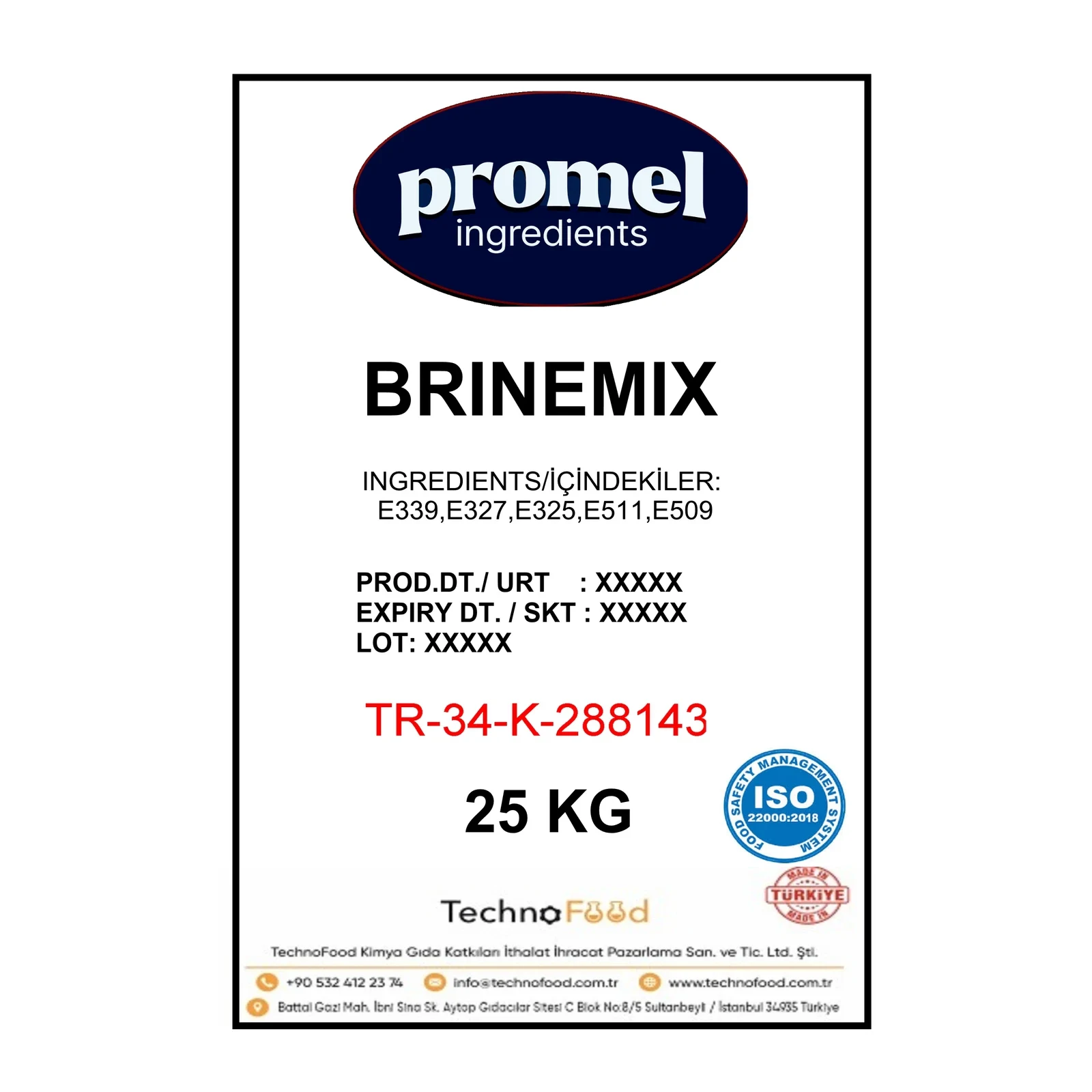
PROMEL BRINEMIX
Promel Brinemix is a powder additive that regulates the mineral and pH balance of brine in brined cheeses, helping to prevent softening, dissolution, slipperiness and gelation on the cheese surface.
View →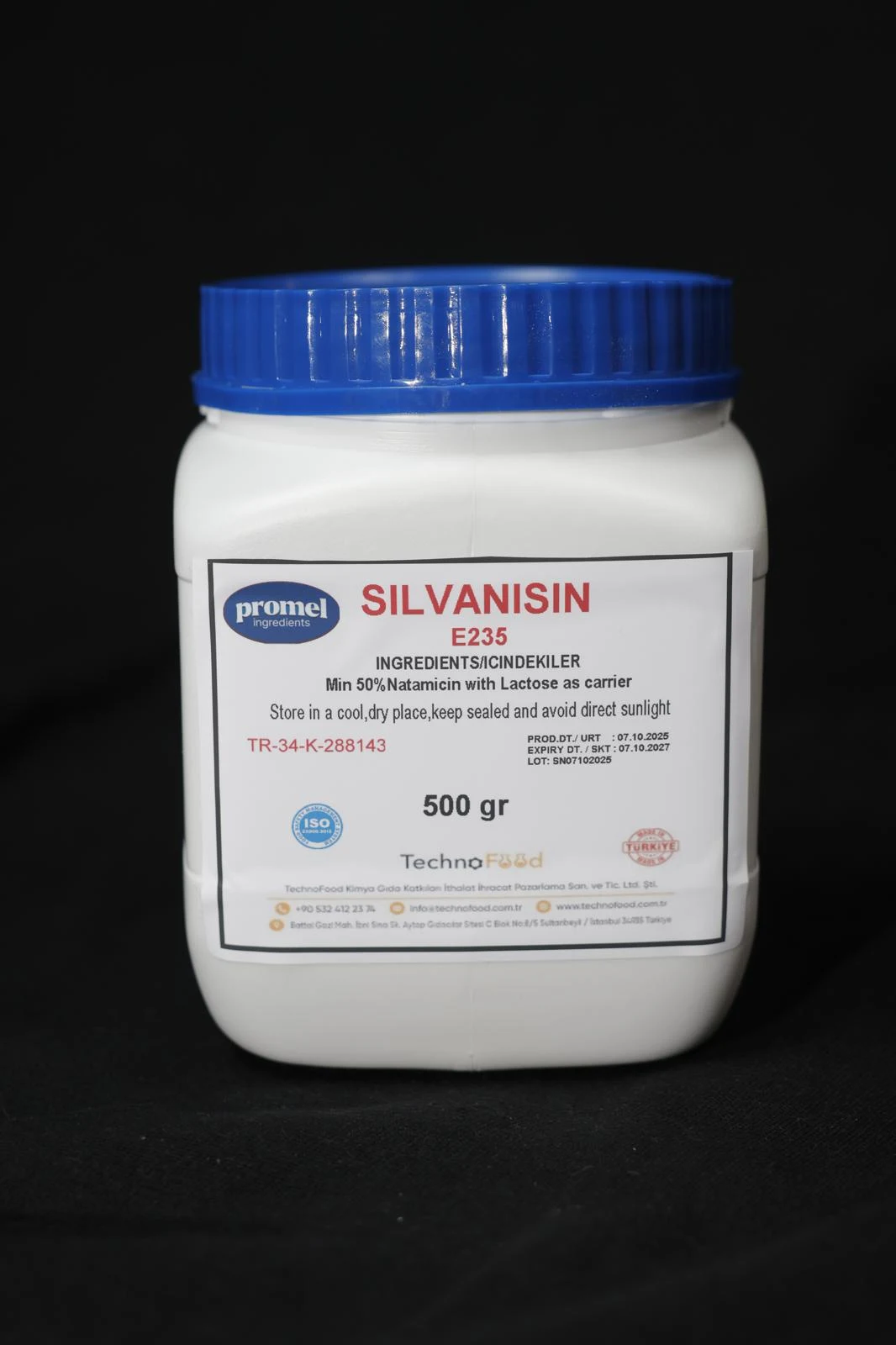
PROMEL SİLVANİSİN
Promel Silvanisin is a nisin (E234)-based preservative produced by Lactococcus lactis fermentation; with an activity of 1000 IU/mg, it is used in processed cheese and cheese to control Clostridium spores and Gram-positive spoilage.
View →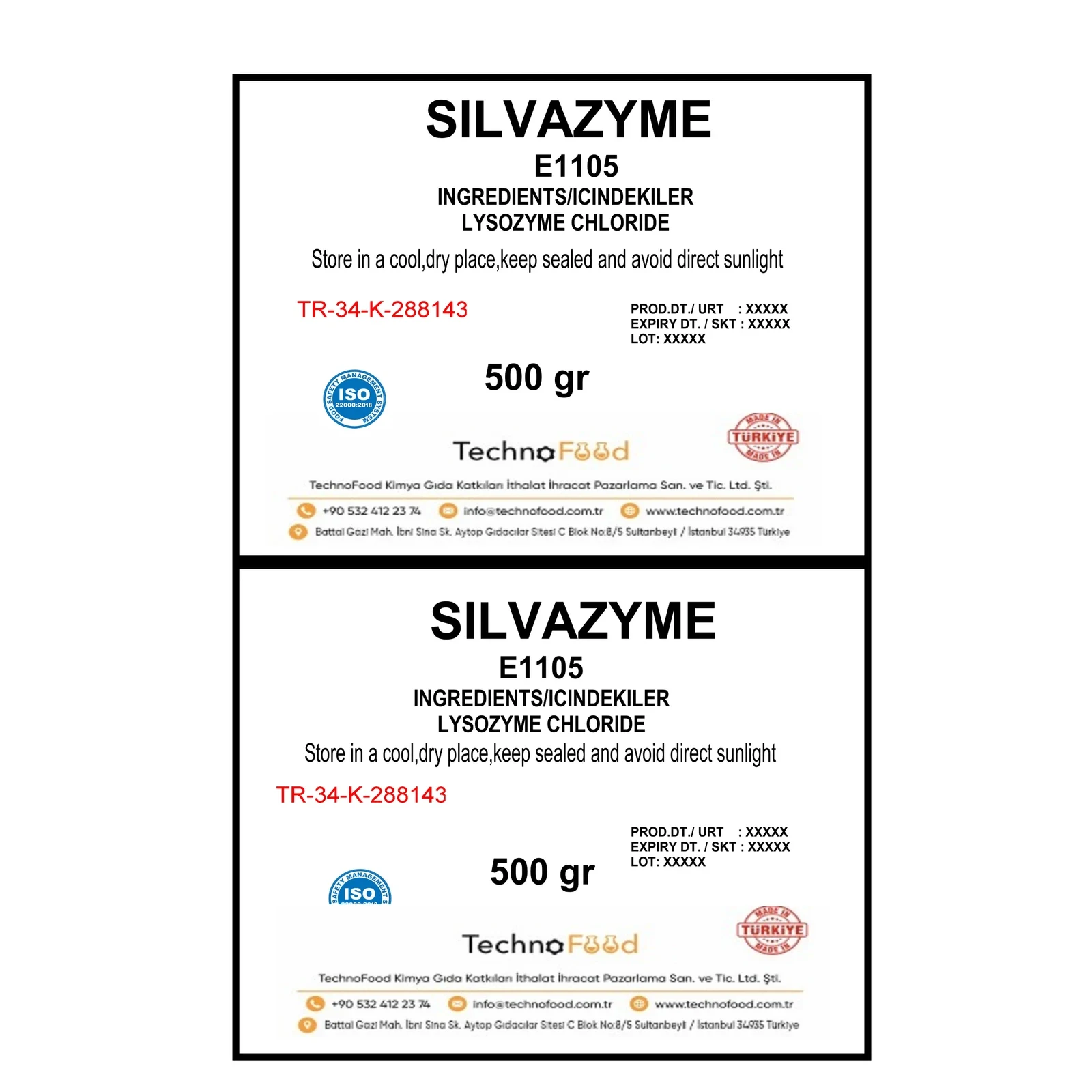
SILVAZYME LYSOZYME
Silvazyme is a lysozyme (E1105) enzyme preparation added to cheese milk to prevent late blowing defects caused by Clostridium tyrobutyricum; developed for ripened hard and semi-hard cheeses.
View →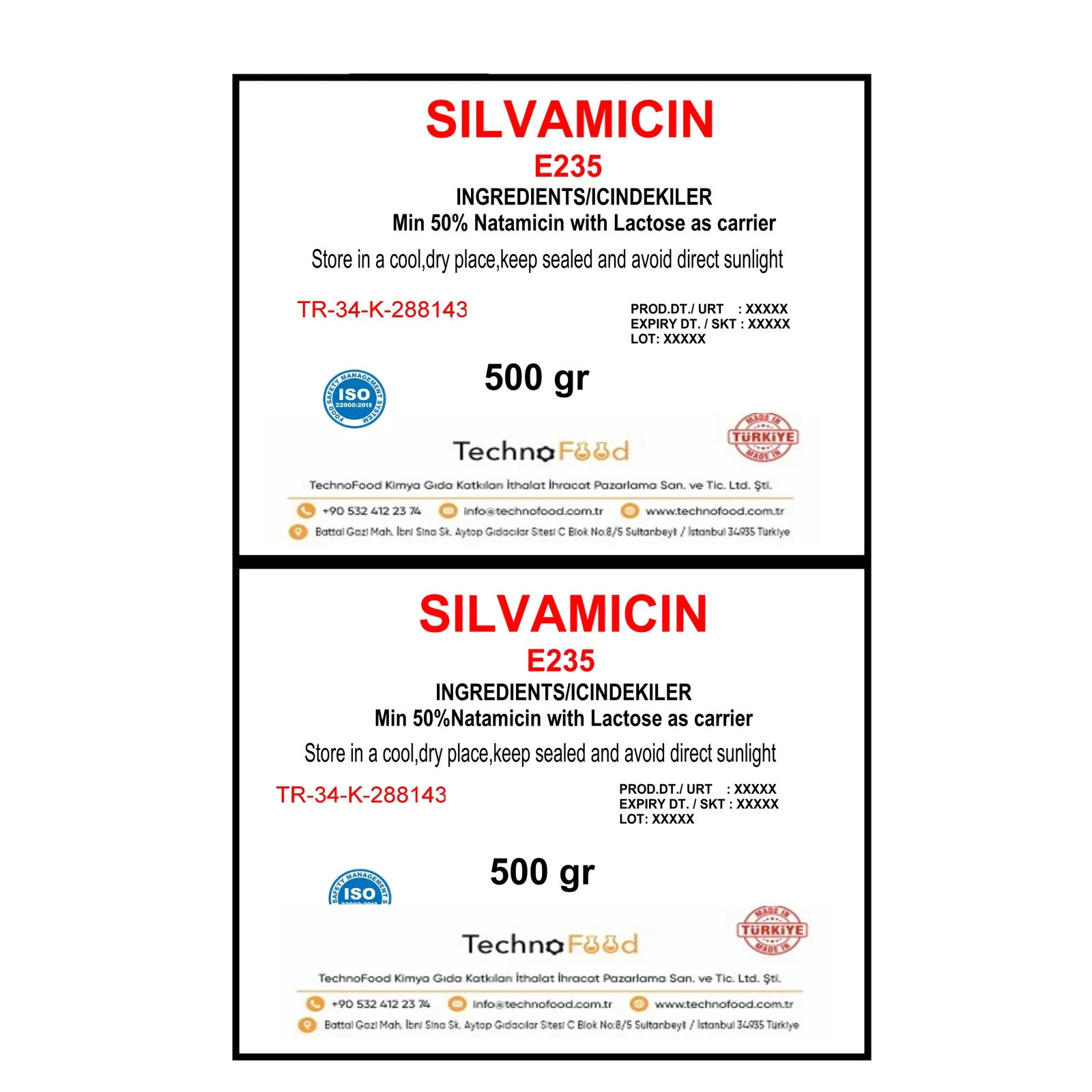
SILVAMYCIN NATAMYCIN
Silvamycin is a powdered preservative produced by Streptomyces natalensis fermentation, containing at least 50 % natamycin (E235); it inhibits the growth of moulds and yeasts on the cheese surface without affecting ripening cultures.
View →