


SAUCES
Emulsifying salt, stabiliser and EMC flavouring solutions for cheese sauces — cheddar, nacho, burger, pasta and dip — delivering fluid consistency that does not thicken on reheating, stability against oiling-off and intense cheese taste.
Key technological challenges in cheese sauce production
Cheese sauces span a broad range — from cheddar, nacho and burger sauces to pasta and dip sauces and varieties with parmesan, edam or blue cheese character. The technological goal is the exact opposite of sliced cheese: an emulsion in which casein is fully dispersed yet does not re-form a network, remaining fluid at filling and serving temperatures. Typical problems include:
- Thickening during hot-holding, reheating or microwaving; skin formation on the surface and oiling-off.
- Cold gelation — sauce that cannot be pumped or squeezed straight from the refrigerator.
- Protein coagulation during sterilisation or hot filling, resulting in graininess and colour darkening.
- Water separation after thawing in frozen ready-meal applications.
- Weakened flavour and pale colour when the cheese content is reduced for cost reasons.
Solution approach
The emulsifying salt for a sauce is selected to minimise creaming. Citrate-based salts sequester calcium and disperse casein effectively while producing less thickening than polyphosphates, yielding a fluid, glossy texture that thins on reheating. Combinations with a high ratio of disodium phosphate and diphosphate, by contrast, increase the viscosity and firmness of the sauce noticeably, and these values continue to rise during storage.
The emulsifying salt stabilises the cheese-derived portion of the sauce; the remainder — water, dairy ingredients and vegetable fat — is carried by the stabiliser and emulsifier system:
- Modified starch and hydrocolloids govern the viscosity of the continuous phase, keeping consistency stable through heating–cooling cycles.
- Emulsifiers keep fat droplets stable, preventing oiling-off in high-fat, low-cheese formulations.
- Controlled pH supports both consistency and the stability of colour and flavour.
- EMC flavourings restore flavour intensity at low dosage in formulations where cheese content has been reduced.
PROMEL product groups
- Emulsifying salts for sauces (Promel MS 80, Promel MS 91, Promel MS 07, Promel MS 4) — sodium citrate and sodium phosphate based MS 80 is the first choice for a non-thickening, fluid consistency; MS 91 and MS 4 are suited to thicker dip and spreadable sauces, while MS 07 is used in topping sauces intended to melt in the oven.
- pH adjustment (Promel MS 12) — used alongside the primary salt when working with acidic raw materials.
- Stabiliser and emulsifier systems (Promel CS 30, Promel SPC 14, Promel S4020) — CS 30 provides body, heat resistance and stability against oiling-off; SPC 14 delivers a creamy texture and limits moisture release; S4020 offers modified starch based body.
- Cheese flavouring (FP000081 cheddar-type EMC, EMC Sheep Flavoring, Flapo Cheddar Flavour) — paste EMC for liquid sauces; spray-dried cheddar flavouring for dry sauce premixes.
- Colour and smoke (Promel Beta Carotene EM 5%, Promel Smoke Flavour 10E) — cheddar orange and smoked sauce varieties.
Process and formulation tips
- Add the emulsifying salt together with the cheese at the start of heating; do not continue cooking until the salt is fully dissolved.
- Prolonged holding and high shear after cooking initiates creaming; keep cooking time short on the sauce line and transfer the mass quickly to filling and cooling.
- Cross-linked modified starches with shear and heat resistance are the typical choice for sterilised or frozen products.
- Viscosity should be measured at both filling temperature and serving temperature (typically 60–70 °C hot-holding).
- EMC flavourings are potent; start at a low dosage and increase gradually in formulations where cheese content is reduced.
- In dry premixes, the emulsifying salt, starch and powdered flavouring are dry-blended; the reconstitution temperature determines the risk of lumping.
Frequently asked questions
Why does the sauce thicken during hot-holding?
Creaming continues under heat and water evaporates. Increasing the citrate proportion, reducing the polyphosphate proportion and selecting a more heat-resistant starch will slow thickening.
How can oiling-off be prevented?
Insufficient emulsifying salt, low pH or an excessive ratio of vegetable fat to cheese are the main causes of oiling-off. Rebalance the salt dosage and pH, and if necessary add a stabiliser system containing an emulsifier.
Can the same flavouring be used for both powder and liquid sauces?
Paste-form EMC disperses well in the water phase and is suitable for liquid sauces; spray-dried flavouring is preferred in dry premixes to maintain flowability.
How can a sauce that gels when cold be corrected?
Reduce the proportion of hydrocolloid and starch that form a gel at low temperatures, and shift the emulsifying salt towards citrate. Balance is achieved by measuring viscosity at both cold and hot temperatures.
Once you share the intended application (hot-holding, retort, frozen product or dry premix) and target cheese content, the Technofood R&D team will recommend a salt, stabiliser and flavouring combination tailored to your formulation; you can request samples for pilot trials.
Products for this Application
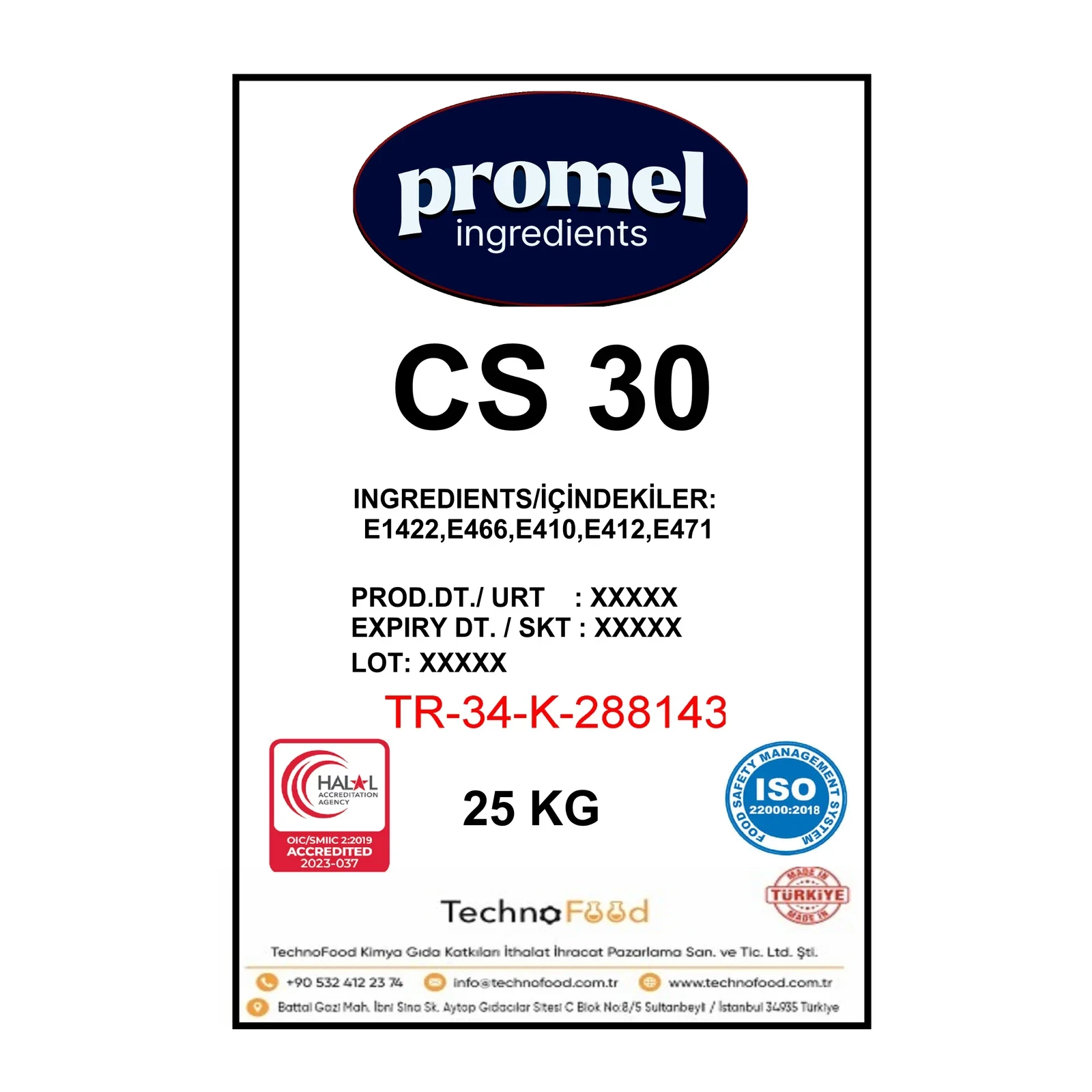
PROMEL CS 30
PROMEL CS 30 is a stabiliser and emulsifier blend designed for cheese sauce production, delivering body, heat stability and resistance to oiling-off.
View →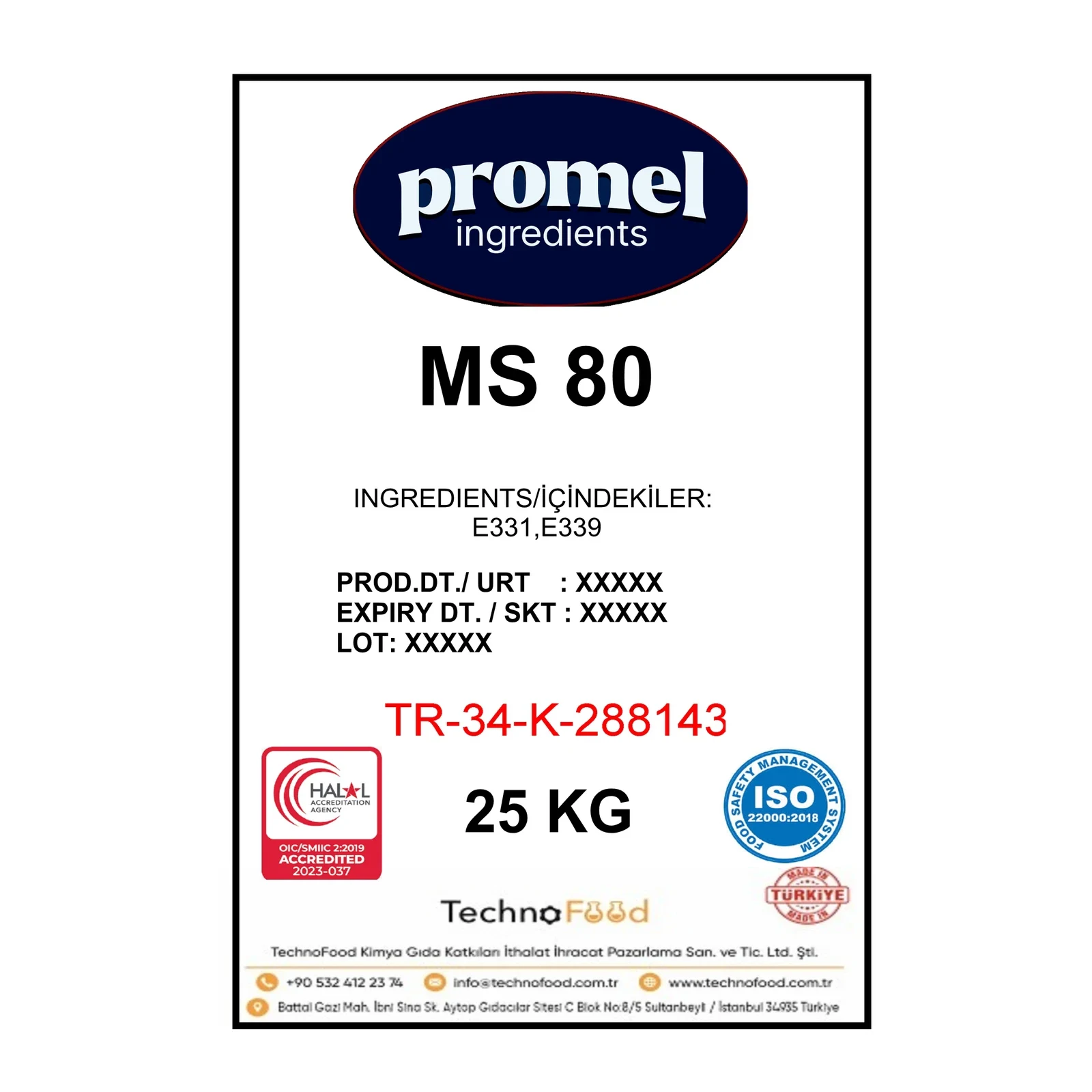
PROMEL MS 80
Promel MS 80 is a sodium citrate (E331) and sodium phosphate (E339) based emulsifying salt designed for cheese sauce and spreadable cheese applications. It delivers strong meltability, a glossy appearance and a fluid consistency that does not thicken over time.
View →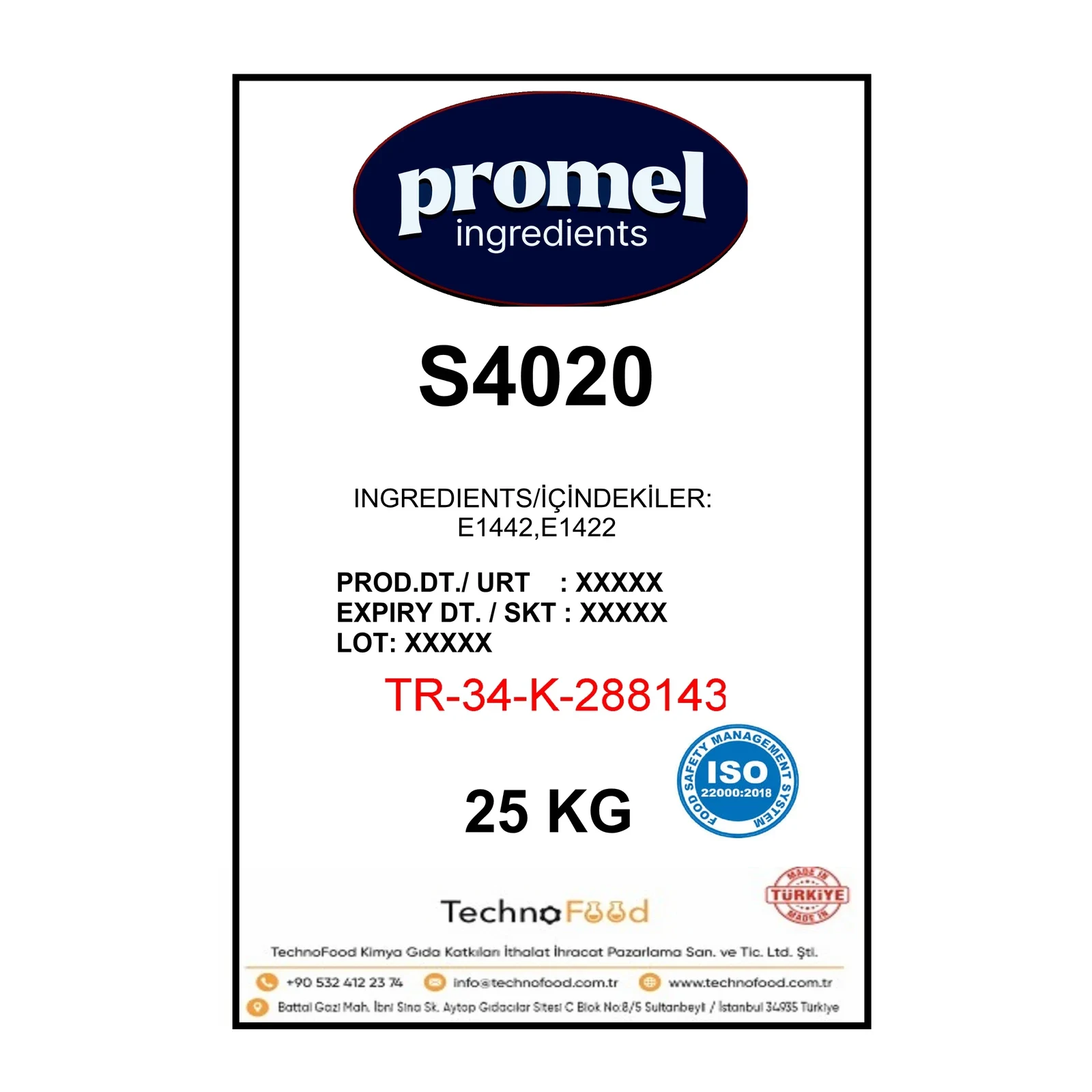
PROMEL S4020 STAB.BLEND
PROMEL S4020 is a modified starch-based stabiliser blend offering high water and fat binding capacity; it provides body, sliceability and melt control in vegetable fat cheeses and plant-based cheese alternatives.
View →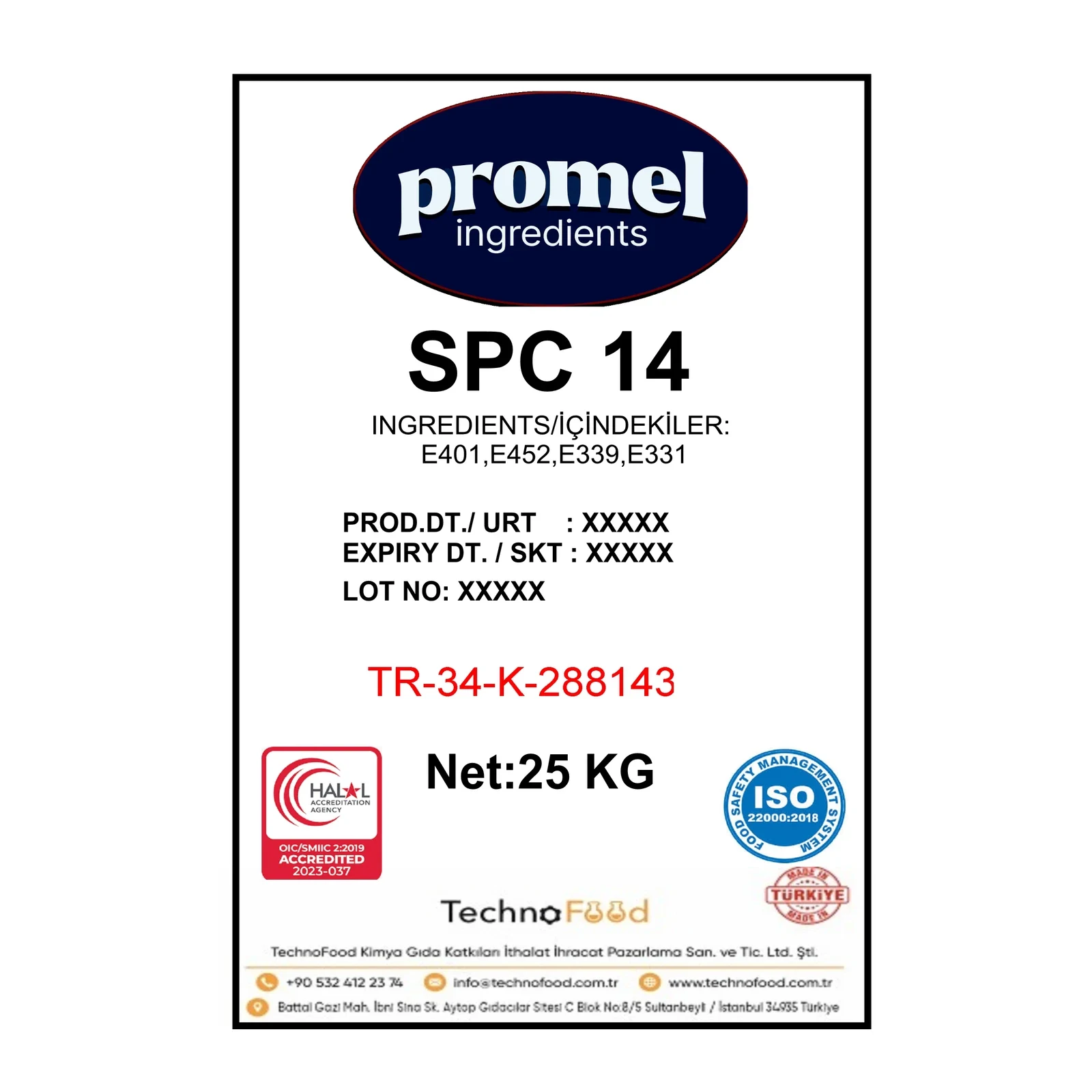
PROMEL SPC 14
PROMEL SPC 14 is a stabiliser blend that creates a creamy, smooth texture in cream cheese, spreadable processed cheese and cheese sauces, limits syneresis and provides heat treatment stability.
View →
Promel MS 4
Promel MS 4 is a citrate-free emulsifying salt based on diphosphate (E450) and polyphosphate (E452) that delivers a glossy, homogeneous texture in soft-type and spreadable processed cheeses.
View →
Promel Smoke Flavour 10E
Smoke flavouring used to impart both a smoky aroma and characteristic smoked colour to dairy and meat products; suitable for mass incorporation and surface application.
View →
PROMEL MS 91
Promel MS 91 is a phosphate–citrate-based emulsifying salt blend that delivers a glossy, smooth surface and easily spreadable consistency in cream cheese, processed cheese triangles and spreadable processed cheeses.
View →
PROMEL MS 07
Promel MS 07 is a single-phase citrate–phosphate emulsifying salt developed for processed pizza cheese and processed cheeses requiring re-meltability. It delivers uniform melting in the oven and clean slicing.
View →
EMC SHEEP FLAVORING
Sheep cheese-based enzyme-modified cheese (EMC) flavouring. Used to impart a mature sheep cheese and tulum-type character to cow's milk or analogue cheese-based products.
View →
SILVAMYCIN NATAMYCIN
Silvamycin is a powdered preservative produced by Streptomyces natalensis fermentation, containing at least 50 % natamycin (E235); it inhibits the growth of moulds and yeasts on the cheese surface without affecting ripening cultures.
View →
FLAPO CHEDDAR FLAVOUR
A powdered cheese flavouring obtained from Cheddar cheese by spray drying; delivers Cheddar taste in dry blends, snack seasonings and powdered sauce premixes.
View →
FP000081 (EMC) FLAVOURING CHEDDAR TYPE
FP000081 is a cheddar-type enzyme-modified cheese (EMC) in paste form. It delivers intense cheese flavour at low dosage in cheddar cream cheese, processed cheese triangles, burger cheese and cheese sauces.
View →
Promel BETA CAROTENE EM 5%
Water-dispersible emulsion containing 5% β-carotene (E160a); added directly to cheese milk, sauces, ice cream and water-phase-dominant dairy products to impart yellow to orange colour.
View →
PROMEL MS 12
Promel MS 12 is an alkaline phosphate salt that raises pH in a controlled manner in processed cheese and dairy-based products. It is used as a corrective agent alongside the primary emulsifying salt when working with high-acidity raw materials.
View →