


SPREADABLE CHEESES
Emulsifying salt and stabiliser systems for achieving target viscosity, a glossy smooth surface and a structure free from syneresis throughout shelf life in cream cheese, processed cheese triangles, labneh and spreadable processed cheese.
Key technological challenges in spreadable cheese production
Cream cheese, processed cheese triangles, labneh and spreadable processed cheese are modern cheese products that — whether starting from milk curd or from milk powder, protein concentrate and fat — are typically brought to their final form by heat treatment and homogenisation. Their high moisture and low dry matter content places them in a far more delicate balance than hard and semi-hard cheeses. Common problems include:
- Viscosity falling outside the target range: product that remains too fluid during filling or thickens more than expected in the first weeks of shelf life.
- Syneresis: serum accumulation on the pack surface, especially in labneh and fresh cream cheese.
- Oiling-off; a dull, rough surface and a floury or grainy mouthfeel.
- Flow and sealing problems during hot filling of triangle and cup packaging.
- Batch-to-batch consistency variations due to variable acidity in raw materials.
Solution approach
In spreadable products the aim is to disperse the casein well while keeping creaming to a minimum. The emulsifying salt sequesters calcium, hydrates the casein and builds a stable emulsion that coats the surface of fat droplets. Homogenisation of the hot mass reduces droplet size, enhancing gloss and a creamy mouthfeel. As creaming progresses the mass thickens, so in spreadable products the cooking time, stirring speed and proportion of reworked cheese are at least as critical as the choice of salt. Even a small amount of rework can accelerate creaming.
Diphosphate- and polyphosphate-based salts deliver a glossy, homogeneous structure, while blends with a higher citrate share maintain fluidity and slow thickening. A higher final pH improves water binding and spreadability. In fermented and strained products (labneh, cream cheese), hydrocolloid- and starch-based stabilisers take precedence over emulsifying salts: they bind free water and support the gel structure formed after heat treatment and homogenisation, thereby reducing syneresis.
PROMEL product groups
- Emulsifying salts for spreadable processed cheese and processed cheese triangles (Promel MS 91, Promel MS 4) — glossy, smooth surface and easy spreadability; MS 91 is a phosphate–citrate blend, MS 4 is a citrate-free diphosphate–polyphosphate base.
- High-fluidity formulations (Promel MS 80) — sodium citrate and sodium phosphate based; a non-thickening, glossy consistency.
- pH correction (Promel MS 12) — a corrector used alongside the main salt when working with high-acidity raw materials.
- Stabiliser blends (Promel LBN05, Promel SPC 14) — syneresis control in labneh and fresh cheese; creamy texture and heat-treatment stability in cream cheese.
- Flavouring and colour (FP000081 cheddar-type EMC, Promel Beta Carotene EM 5%, Promel Chllorophill, Promel Smoke Flavour 10E) — for cheddar, smoked or herb varieties.
Process and formulation tips
- In spreadable processed cheese the emulsifying salt is typically used at 1.5–2.5 % of the blend and adjusted according to the protein content.
- The final pH is typically targeted at 5.7–6.0; a lower pH increases the risk of hardening and syneresis.
- Homogenisation increases gloss but excessive processing also accelerates thickening; pressure and duration should be standardised.
- Hot filling is typically carried out at 70–85 °C; thickening of the mass waiting in the filling tank should be monitored and the holding time kept constant.
- To prevent lumping, the stabiliser should be added as a dry pre-blend with sugar, salt or milk powder.
- In labneh the dry matter and acidity targets after straining should be fixed, and the stabiliser dosage adjusted according to dry matter.
Frequently asked questions
Why does the product thicken in the first weeks of shelf life?
Ongoing slow creaming inside the package and rearrangement of the casein network cause this firming. Typical corrective measures include reducing the polyphosphate share, increasing the citrate share, shortening the cooking time and lowering the rework ratio.
Is emulsifying salt needed to prevent syneresis in labneh?
Generally not. Labneh is a fermented and strained product; a water-binding stabiliser, correct dry matter and controlled cooling are more appropriate approaches for syneresis control.
Why does the surface look dull and rough?
Insufficient emulsification, large fat droplets or incompletely dissolved salt and stabiliser cause this appearance. Ensuring thorough dispersion of the salt into the raw materials, adequate cooking time and homogenisation will restore gloss.
How do you choose between MS 91 and MS 4?
MS 91 is a phosphate–citrate blend and keeps the consistency soft; MS 4 contains no citrate and delivers a more pronounced body and gloss through diphosphate and polyphosphate. The choice is made by pilot trial based on the target viscosity. The regulations of the country where the finished product will be marketed should be verified.
Once you share your target viscosity, filling temperature and packaging type, the Technofood R&D team will recommend the right salt and stabiliser selection for your formulation; samples and technical data sheets are provided to prepare for pilot production.
Products for this Application
PROMEL LBN05 STAB.BLEND
PROMEL LBN05 is a stabiliser blend that reduces syneresis by binding free water in labneh and fresh spreadable cheeses, enhancing body and delivering a smooth, glossy texture.
View →
PROMEL MS 80
Promel MS 80 is a sodium citrate (E331) and sodium phosphate (E339) based emulsifying salt designed for cheese sauce and spreadable cheese applications. It delivers strong meltability, a glossy appearance and a fluid consistency that does not thicken over time.
View →
PROMEL SPC 14
PROMEL SPC 14 is a stabiliser blend that creates a creamy, smooth texture in cream cheese, spreadable processed cheese and cheese sauces, limits syneresis and provides heat treatment stability.
View →
PROMEL CHLOROPHYLLIN
Water-soluble liquid chlorophyllin food colour; used to impart and adjust green shades in ice cream, flavoured fermented milk products and herb/spice cheeses.
View →
PROREN FERMENTED CHYMOSIN 500 GR
Proren is a powder (granular) rennet containing chymosin produced by Kluyveromyces lactis fermentation; it coagulates with high specificity, supporting cheese yield and consistent ripening. Available in 500 g packs.
View →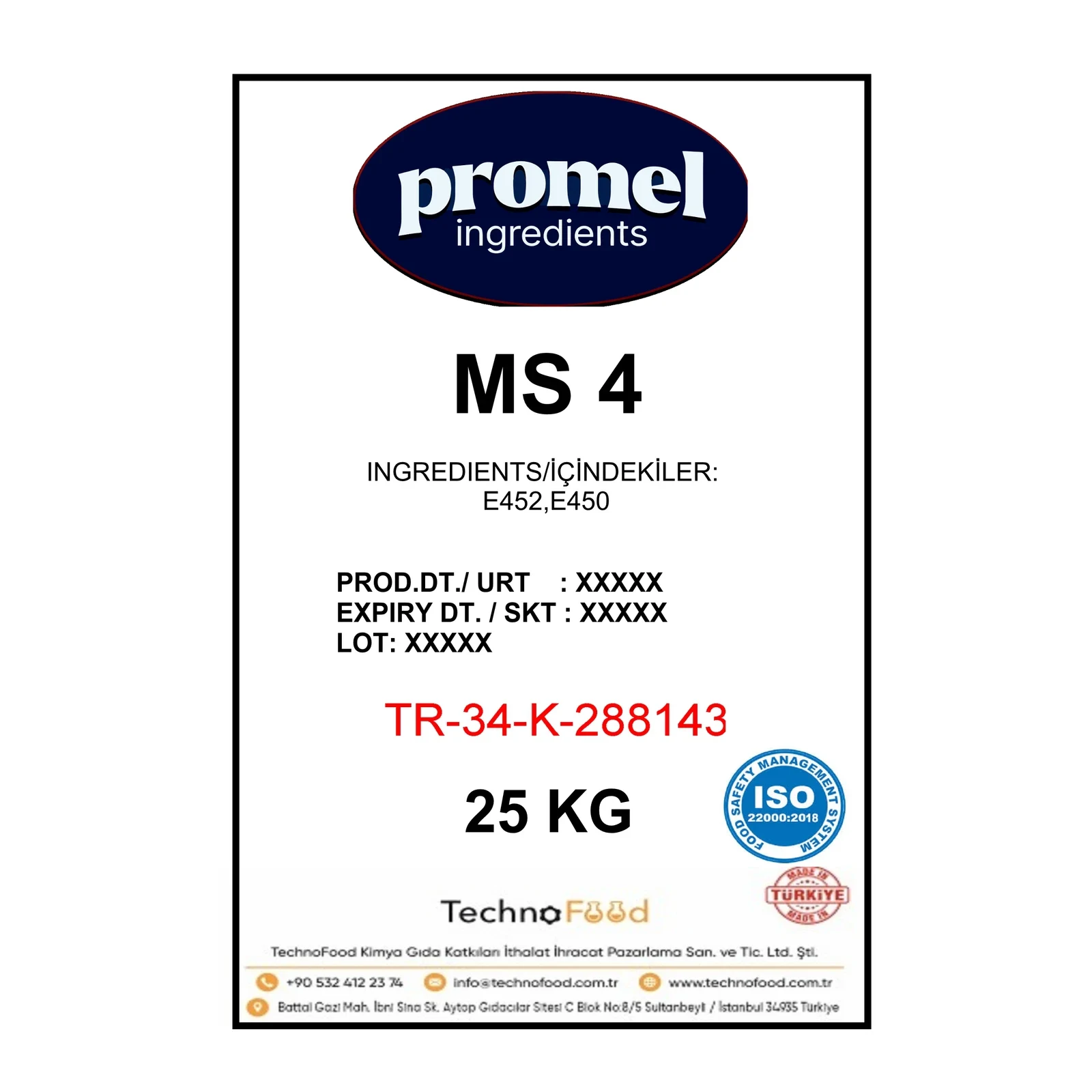
Promel MS 4
Promel MS 4 is a citrate-free emulsifying salt based on diphosphate (E450) and polyphosphate (E452) that delivers a glossy, homogeneous texture in soft-type and spreadable processed cheeses.
View →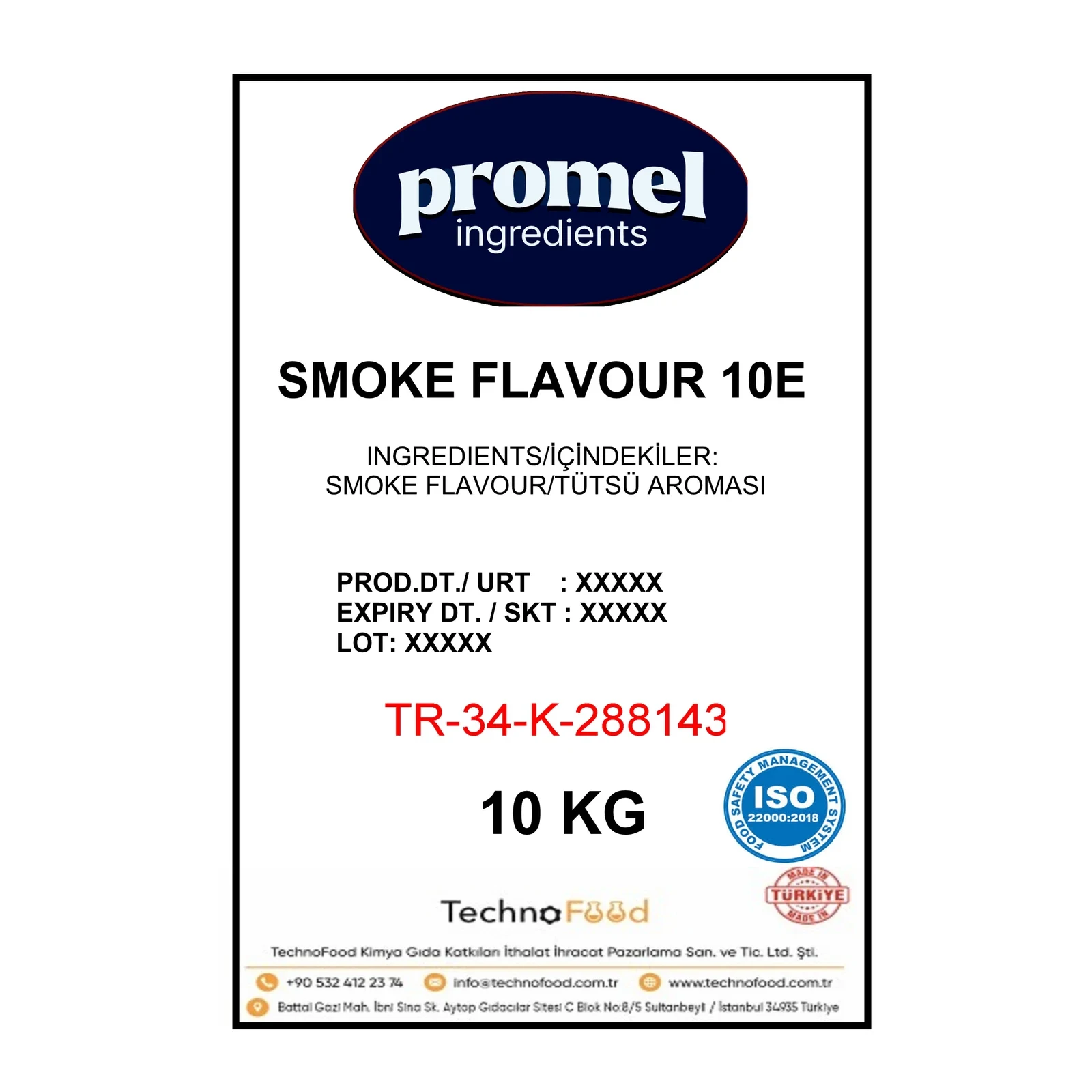
Promel Smoke Flavour 10E
Smoke flavouring used to impart both a smoky aroma and characteristic smoked colour to dairy and meat products; suitable for mass incorporation and surface application.
View →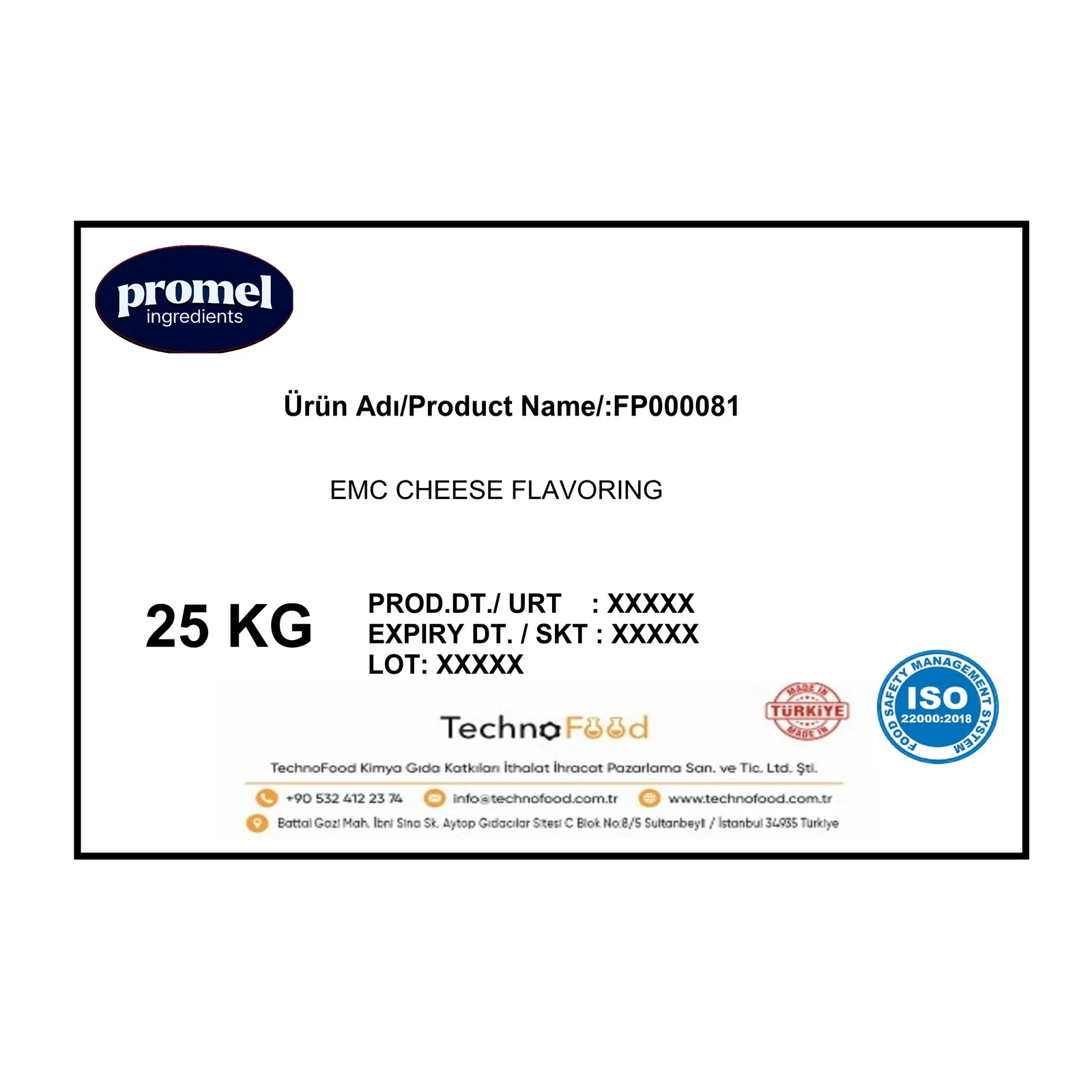
FP000081 (EMC) FLAVOURING CHEDDAR TYPE
FP000081 is a cheddar-type enzyme-modified cheese (EMC) in paste form. It delivers intense cheese flavour at low dosage in cheddar cream cheese, processed cheese triangles, burger cheese and cheese sauces.
View →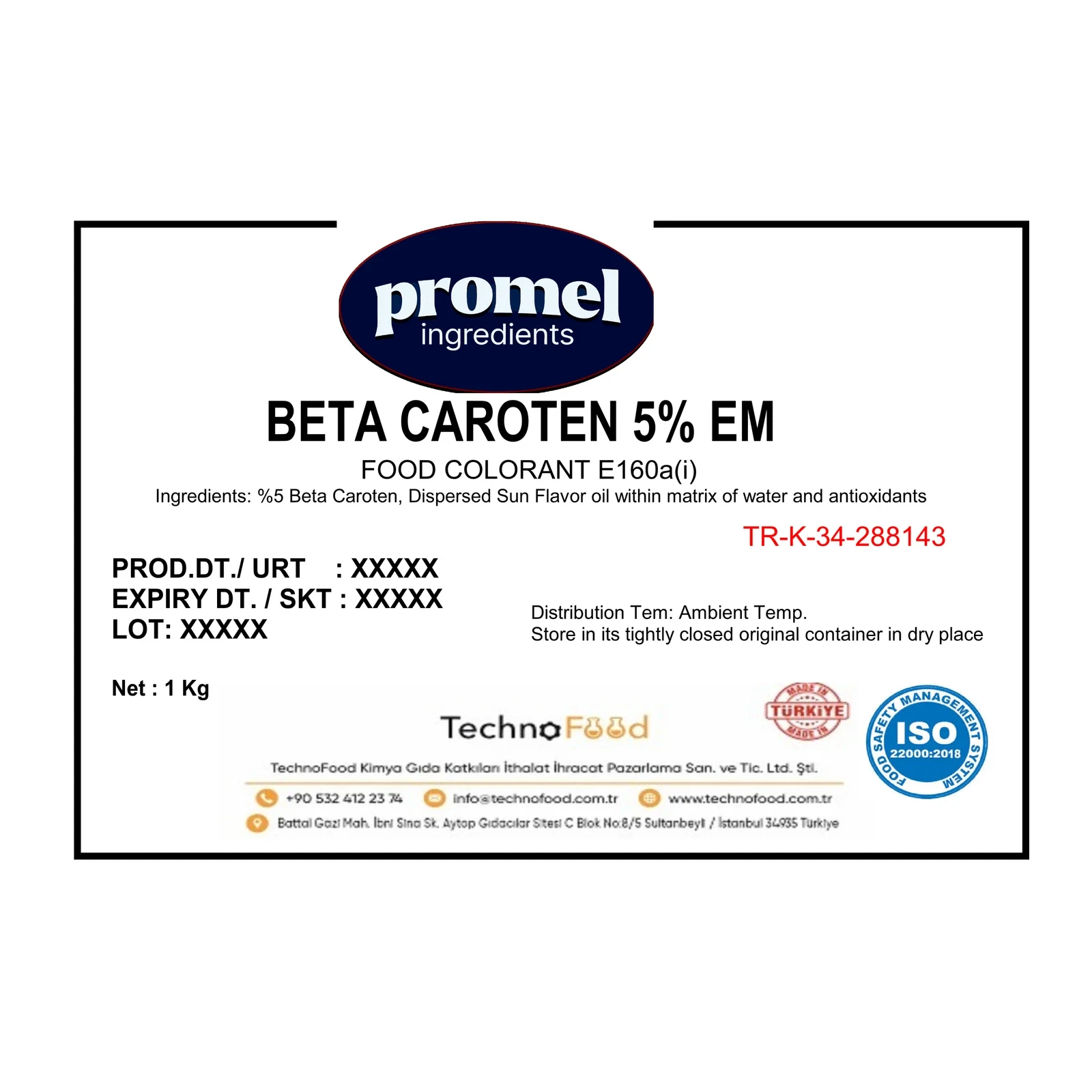
Promel BETA CAROTENE EM 5%
Water-dispersible emulsion containing 5% β-carotene (E160a); added directly to cheese milk, sauces, ice cream and water-phase-dominant dairy products to impart yellow to orange colour.
View →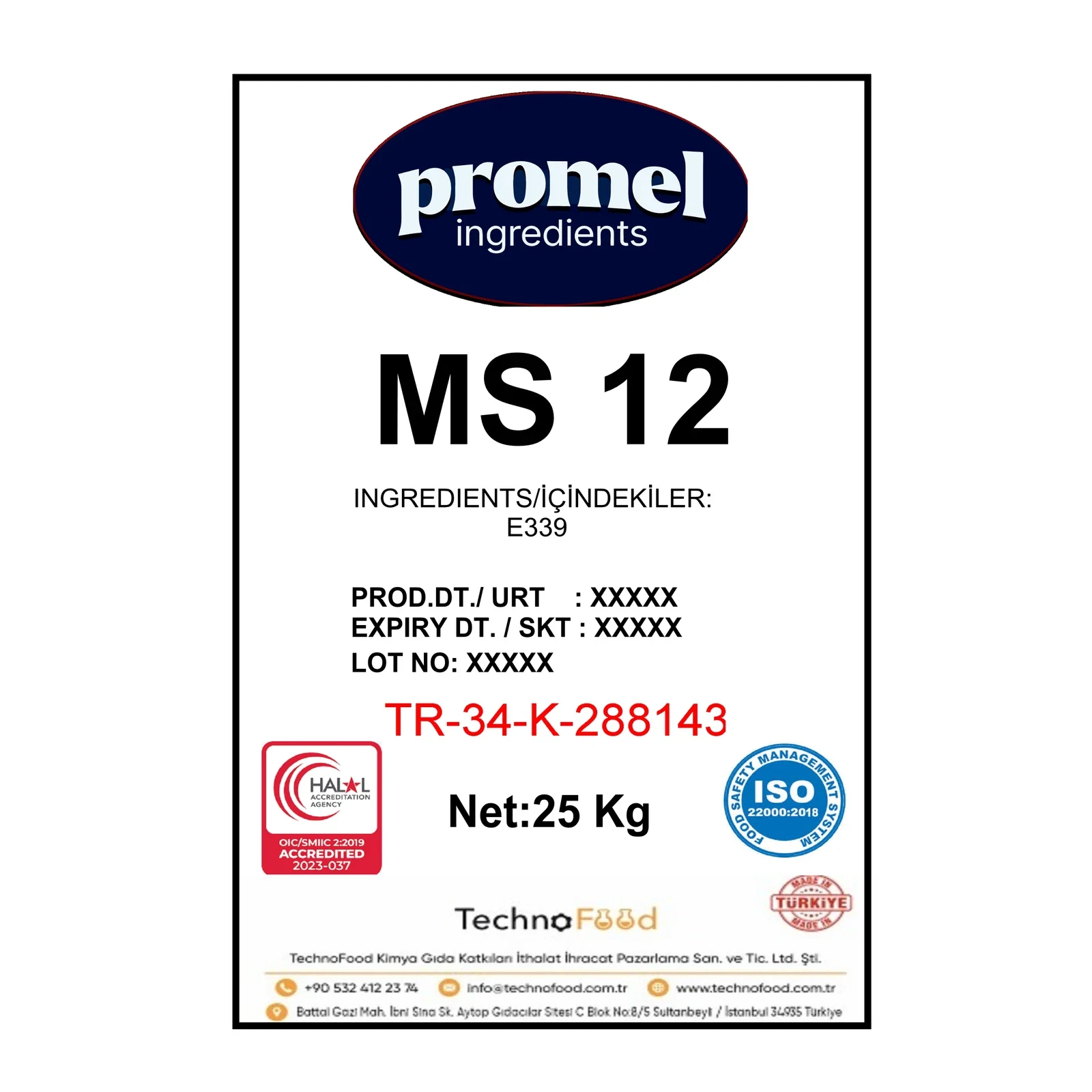
PROMEL MS 12
Promel MS 12 is an alkaline phosphate salt that raises pH in a controlled manner in processed cheese and dairy-based products. It is used as a corrective agent alongside the primary emulsifying salt when working with high-acidity raw materials.
View →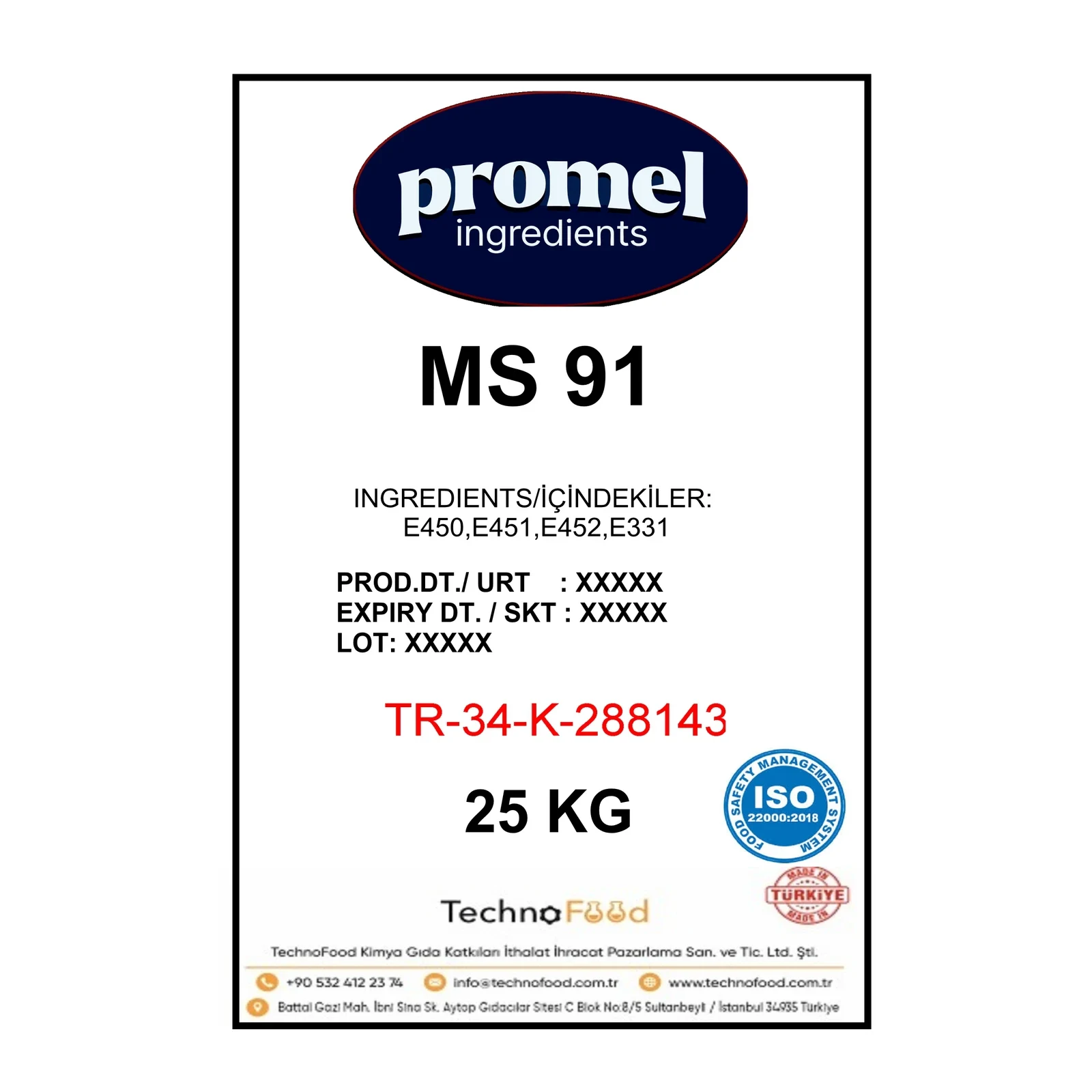
PROMEL MS 91
Promel MS 91 is a phosphate–citrate-based emulsifying salt blend that delivers a glossy, smooth surface and easily spreadable consistency in cream cheese, processed cheese triangles and spreadable processed cheeses.
View →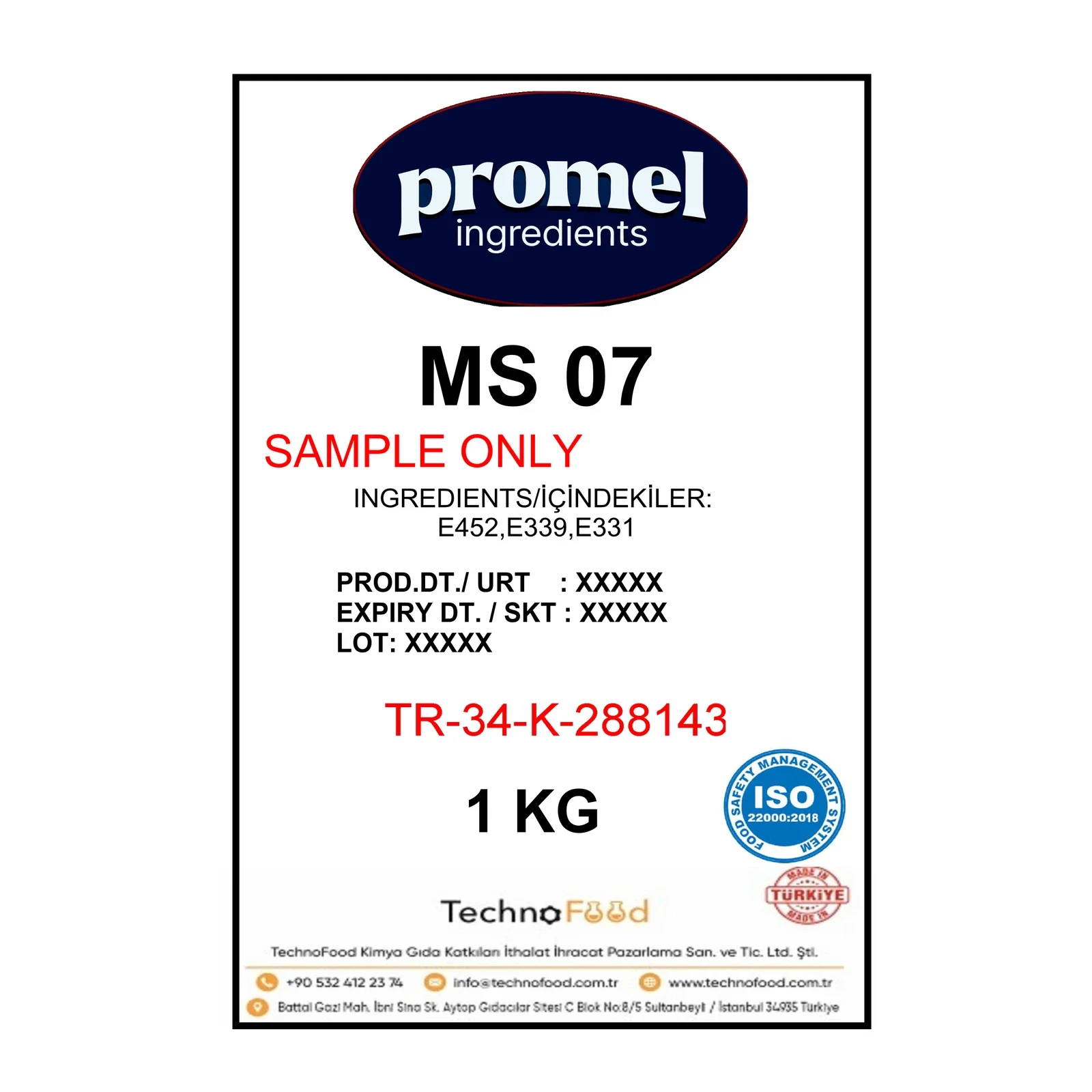
PROMEL MS 07
Promel MS 07 is a single-phase citrate–phosphate emulsifying salt developed for processed pizza cheese and processed cheeses requiring re-meltability. It delivers uniform melting in the oven and clean slicing.
View →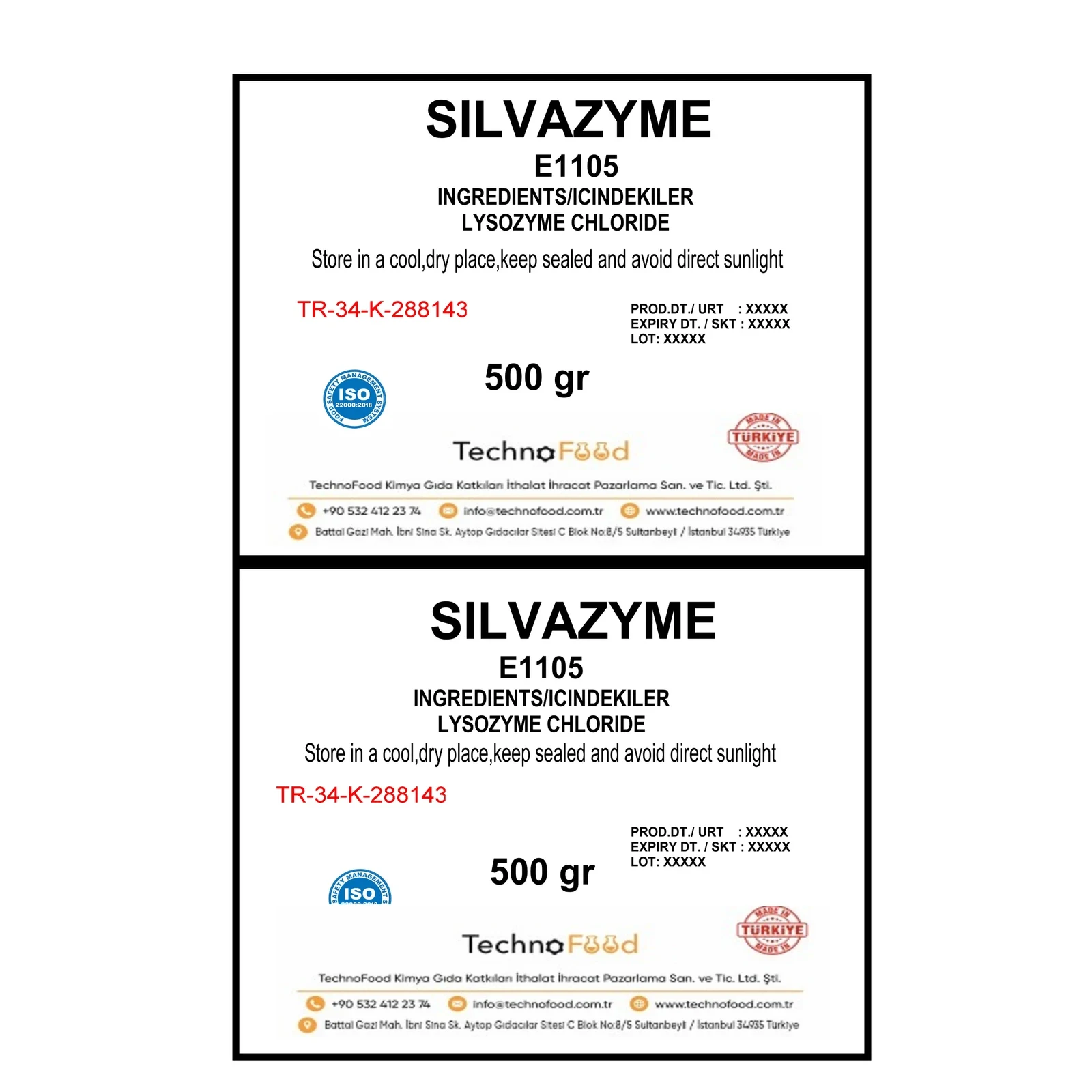
SILVAZYME LYSOZYME
Silvazyme is a lysozyme (E1105) enzyme preparation added to cheese milk to prevent late blowing defects caused by Clostridium tyrobutyricum; developed for ripened hard and semi-hard cheeses.
View →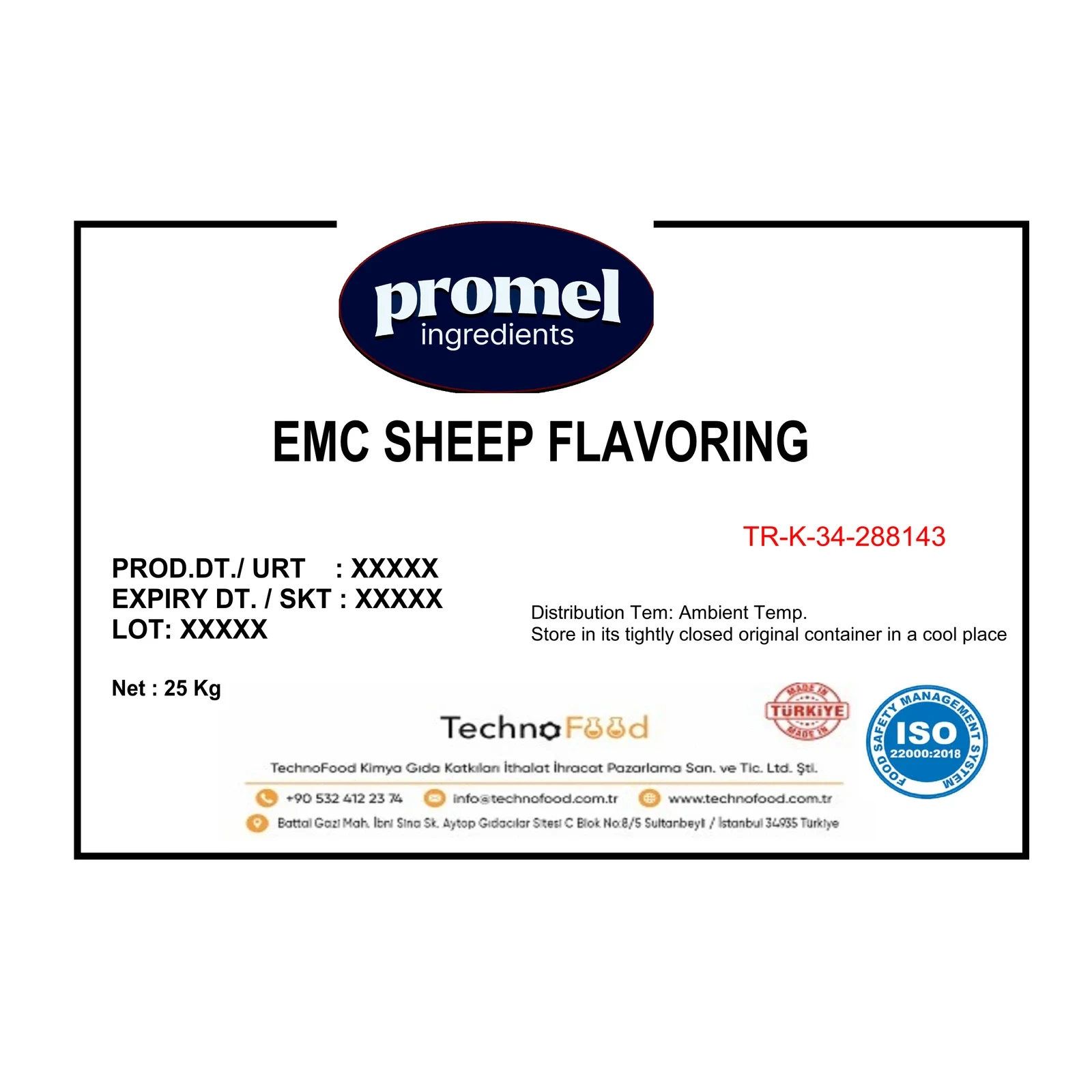
EMC SHEEP FLAVORING
Sheep cheese-based enzyme-modified cheese (EMC) flavouring. Used to impart a mature sheep cheese and tulum-type character to cow's milk or analogue cheese-based products.
View →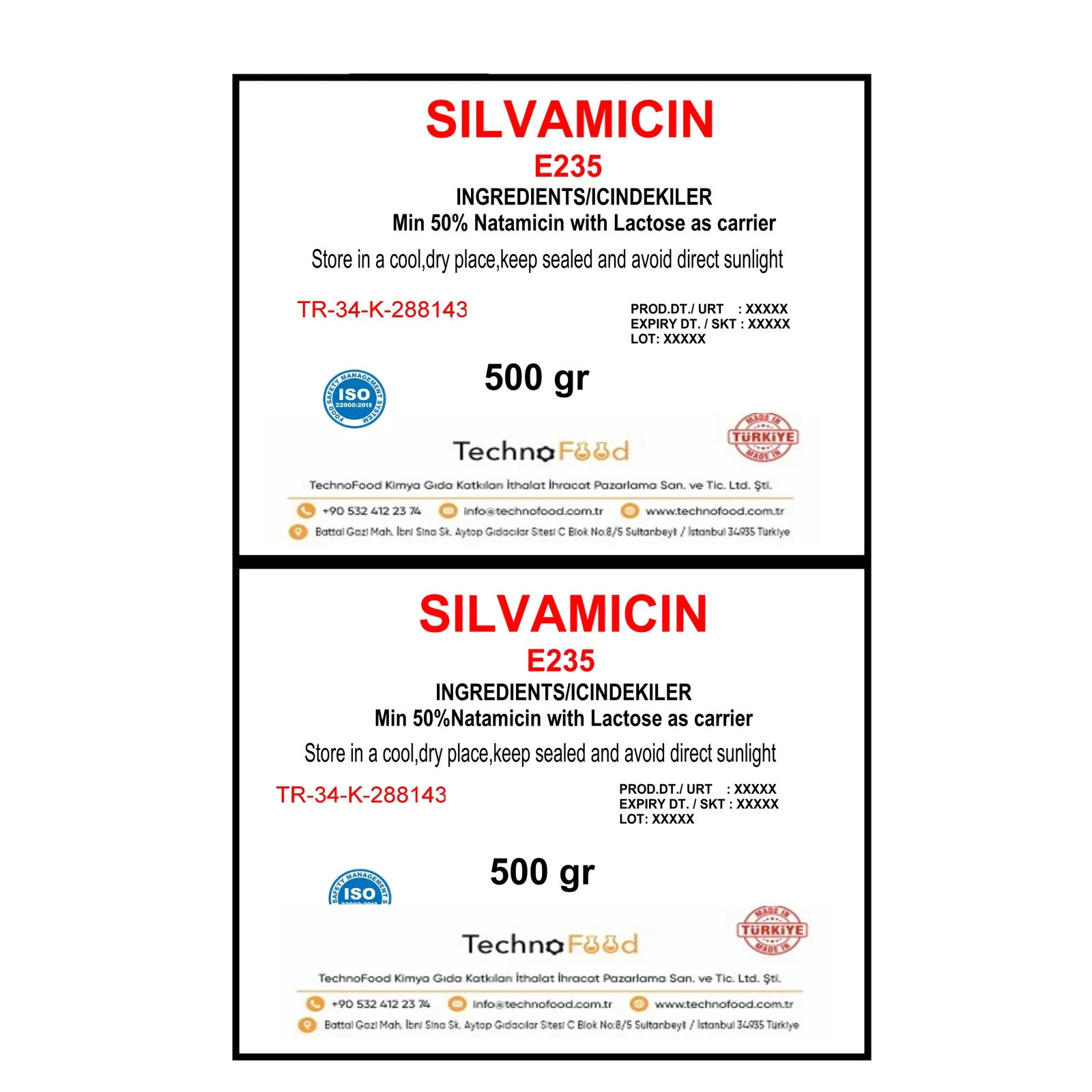
SILVAMYCIN NATAMYCIN
Silvamycin is a powdered preservative produced by Streptomyces natalensis fermentation, containing at least 50 % natamycin (E235); it inhibits the growth of moulds and yeasts on the cheese surface without affecting ripening cultures.
View →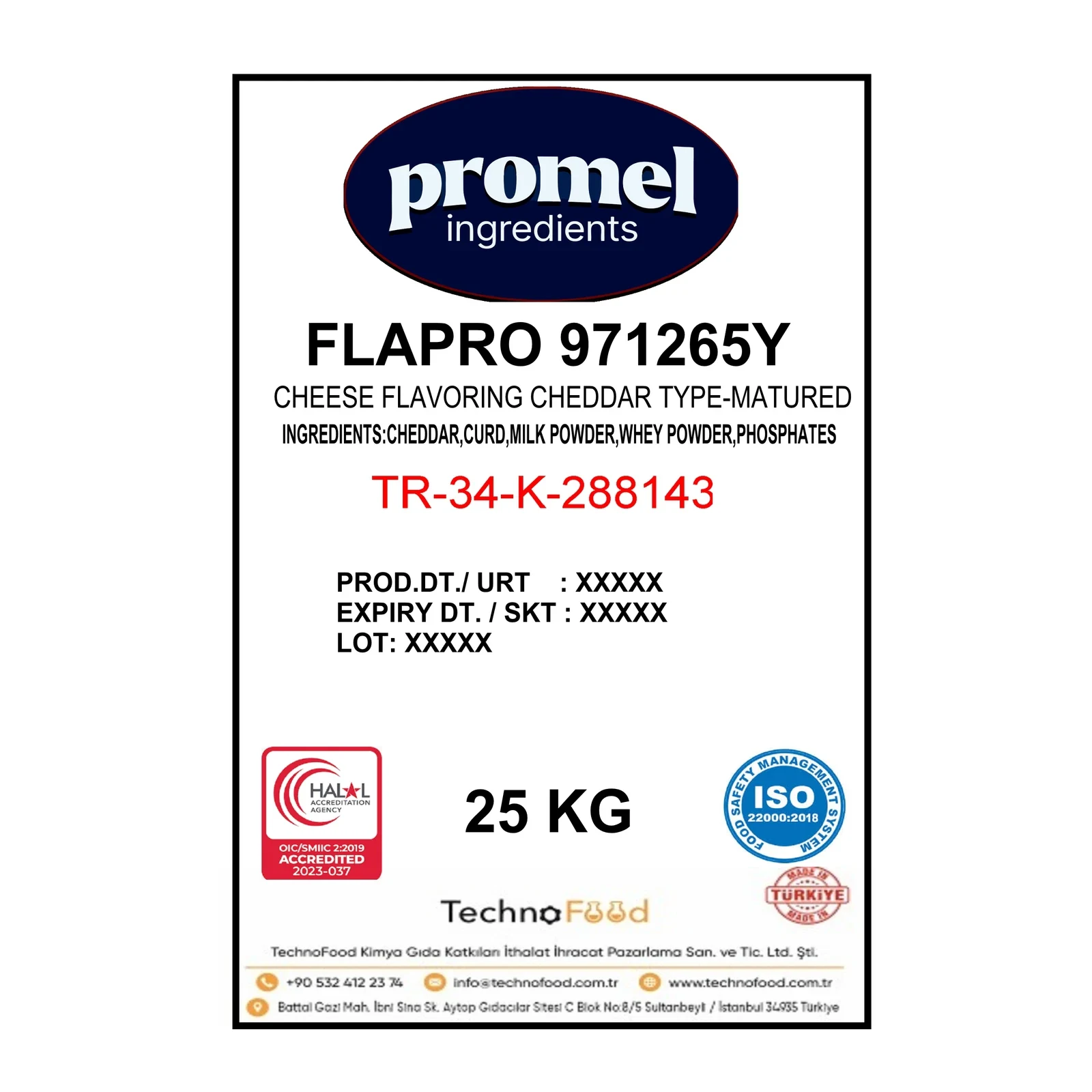
FLAPO CHEDDAR FLAVOUR
A powdered cheese flavouring obtained from Cheddar cheese by spray drying; delivers Cheddar taste in dry blends, snack seasonings and powdered sauce premixes.
View →